• Optical Products

Electrification and Autonomous Driving in Europe: Material Innovation through Japan-Europe Collaboration

  • このエントリーをはてなブックマークに追加

Series: "Future Vehicles"——Evolving automotive technologies around the world
This series presents automotive technology trends in four global markets through interviews with representatives from Dexerials' subsidiaries.
Japan | U.S. | ▶Europe | China

Dexerials' new strategy for the European market amid accelerating electrification and tightening environmental regulations

In the European automotive market, environmental regulations are becoming increasingly stringent while electrification and autonomous driving are advancing in parallel, placing manufacturers in a period of unprecedented transformation.
Amid these changes, Dexerials is working with local partners to propose new material solutions for automotive development in Europe.
In 2014, Dexerials established an office in Frankfurt, Germany, as an automotive-focused base. We spoke in depth with Yosuke Sasaki, Sales General Manager of Dexerials Europe B.V., who has led the company's automotive business in Europe for more than a decade, about the characteristics of the European market and the company's strategy.

Trends in Europe's automotive market and the advancement of electrification and autonomous driving driven by CASE

——Please tell us about the next-generation technologies attracting attention in the European automotive industry.

The automotive industry is undergoing major structural changes as technologies such as electrification and autonomous driving continue to advance. In recent years, the acronym CASE (Connected, Autonomous, Shared, Electric) has become widely used to describe this transformation. From a European automotive market perspective, my prediction is that progress will occur in the following order: E (electrification) first, followed by A (autonomous driving), then C (connected), and finally S (sharing).

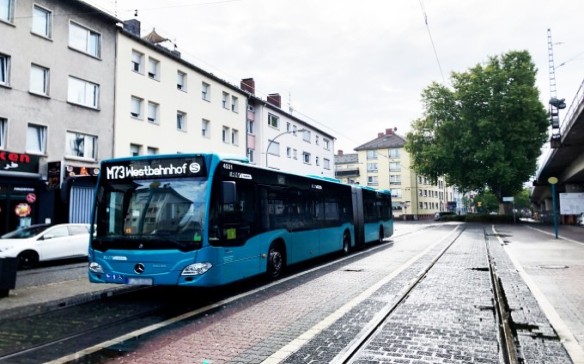
Electrification, the first phase, is already advancing rapidly in Europe, starting with buses and other forms of public transportation. In Frankfurt, many bright blue-green electric buses are now in service, and this color has become a symbol of environmental awareness among local residents. In large cities, an increasing number of apartment complexes and detached houses are being equipped with charging facilities, and the number of public charging stations continues to grow. (Source: Electric cars: EU needs 8 times more charging points per year by 2030 to meet CO2 targets)

Our Dutch base, Dexerials Europe B.V., has also installed charging stations in its parking area, allowing employees to charge their vehicles while at work and improving convenience. An increasing number of charging stations are also being installed at roadside locations and filling stations, making it clear that the infrastructure for electrification is expanding steadily. In addition, more households are installing solar power generation systems and using the electricity they produce to charge their hybrid and electric vehicles.

——What do you think about the development of autonomous driving technology in Europe?

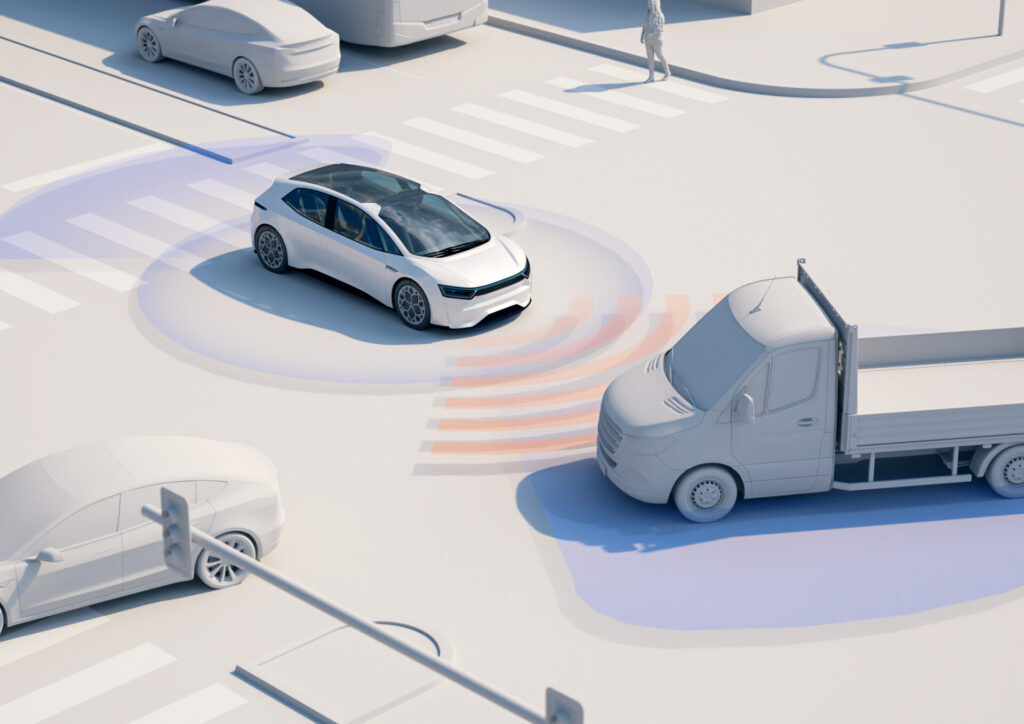
I will be crucial to accelerating the development of autonomous driving. Autonomous driving systems rely on sensors such as cameras, LiDAR, and radar. Much like the human brain processes sensory input, AI integrates and analyzes data from these sensors to control the vehicle.

In Europe, not only automotive manufacturers, but also players from outside the automotive industry, including AI startups and telecommunications companies with novel technologies, are increasingly involved in autonomous driving development. There are limits to how much autonomous driving capabilities can be improved with a single vehicle. Through VtoV (vehicle-to-vehicle) communication, vehicles can share information about each other's movements. Through VtoX (vehicle-to-everything) communication, vehicles can be connected to base stations and control centers. These technologies enhance convenience.

Today, if a driver is running low on fuel, they must search for the nearest fuel station themselves. In the near future, it will be normal for the vehicle to suggest, "You are low on fuel. Would you like to refuel at the filling station 5 km ahead?" To help realize this future, we aim to contribute to the establishment of autonomous driving technology by leveraging our strengths in thermal management and photonics technologies.

——How far has car sharing and electric mobility spread in Europe?

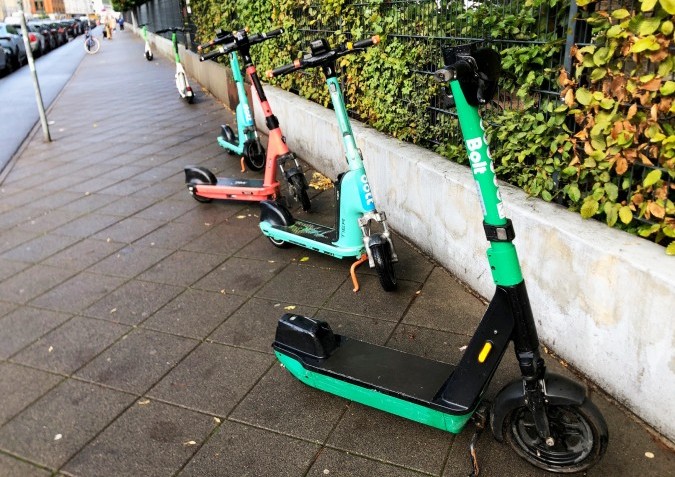
Car sharing services are now roughly on par with Japan, but private car ownership remains common. However, when looking at mobility more broadly—not limited to passenger cars—systems for sharing electric kick scooters and electric bicycles that connect cars, trains, and buses have become widespread. In countries such as Germany and France, major cities have deployed shared docking and parking zones across many areas, allowing users to drop off these vehicles conveniently. Because these mobility devices are equipped with lithium-ion batteries, we expect growing demand for our surface mount fuses.

Although this is not strictly "sharing," most company cars in Germany are leased rather than owned. When driving through German cities, one sees a large number of European luxury cars, but it is said that more than 70% of them are actually leased company cars. (Sources: Germany's new passenger car registrations in H1 2025: BEVs and PHEVs show high-growth (Germany), Are Germany's subsidized company cars hurting EV adoption?)

——Why is car leasing favored in Germany?

Under this system, leased vehicles are typically replaced every 3 years. In other words, a system has been created in which new vehicles are sold every 3 years. This supports steady sales of new vehicles and helps sustain the German economy. Because a 3-year-old car is still relatively new, it retains a high resale value in the used-car market, helping sustain the replacement cycle. Employees also benefit from this system by being able to drive a new car every 3 years.

Environmental policies impacting Europe's automotive industry and the rise of Chinese manufacturers

Environmental regulations in Europe are becoming increasingly stringent each year. What impact are these trends having on the automotive industry? We also asked about changes in the competitive landscape.

——How is Europe's carbon neutral policy influencing automakers' electrification strategies and development processes?

In the electric vehicle (EV) industry, Chinese companies have established a significant global presence in the lithium-ion battery market. In Europe, electrification is progressing alongside a reassessment of engine technologies. European manufacturers, which excel in engine technologies, are placing greater emphasis on hybrid vehicles. Their efforts include reducing CO2 emissions through improved internal combustion engine efficiency while simultaneously developing biofuels and synthetic fuels as alternatives to petroleum.

At the same time, all manufacturers are striving to achieve carbon neutrality. Customers are now asking us, as a materials manufacturer, to quantify the current CO2 emissions associated with each component and to present milestones for future reductions.

——What is the presence of Chinese EV manufacturers in the European market?

Chinese-manufactured EVs are already widely visible on European roads, and dealerships are appearing in city centers. While many automakers locate their dealerships in suburban areas, Chinese manufacturers tend to open stores in urban centers alongside luxury brands. This strategy is intended to move away from the long-standing perception of being a "low-cost brand" and to strengthen brand value.

Furthermore, batteries are a critical factor in predicting the future of the automotive industry. As mobility becomes increasingly electrified, China gains an advantage due to its strong position in the supply of rare metals, essential materials for battery production. While a Swedish company planning to manufacture batteries in Europe has withdrawn, Chinese battery manufacturers are expanding into Eastern Europe, including the Czech Republic, Hungary, and Poland.

Against this backdrop, European automakers are increasingly choosing collaboration over confrontation with China. For European manufacturers, China has become a critical supplier of batteries and components, and there is a growing movement toward building mutually complementary relationships.

Accelerating a design-in strategy to gain European market share

To accelerate business in the European market, Dexerials is promoting a design-in strategy across the region.

——Please tell us about Dexerials' future strategy in Europe.

In Europe, very strict technical requirements are in place, and it is generally difficult to participate in a project unless these requirements are met. For this reason, it is important for us to understand at an early stage what European automakers (OEMs) and Tier 1 manufacturers aim to achieve and to get involved from the earliest phase of development.

This is the essence of the "design-in" strategy that Dexerials is pursuing in its automotive business. Through a design-in strategy, we, as a materials manufacturer, propose materials, processes, and technologies from the product design stage onward to achieve optimal performance. By doing so, we can build relationships that cannot be replaced by other companies and establish a solid position in the European automotive industry, where quality assurance and safety requirements are high.

——It seems that collaboration with R&D centers in Japan is key to promoting the design-in strategy in Europe.

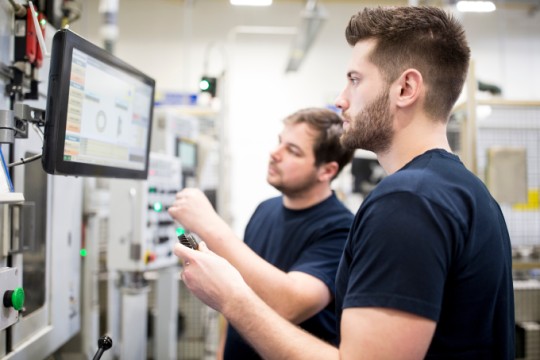
Exactly. We collaborate with the Automotive Solution Laboratory (AS Lab), an experimental facility located at the R&D center of our headquarters (Tochigi Technology Center), to build a development system that can respond to customer needs in real time. The AS Lab was created as an experimental facility for developing next-generation displays in collaboration with customers. It is equipped with state-of-the-art display evaluation equipment and advanced experimental processes. Each piece of equipment is also fitted with internet-connected cameras, enabling remote observation.
For more information about the AS Lab, please see this article.

By making full use of this facility, we can quickly verify issues brought back from our European customers and provide rapid feedback on prototype results. Our ability to perform in-depth technical verification at the AS Lab, from proof of concept (POC) to just before mass production, is a unique and powerful strength.

Through collaboration with the AS Lab, we have established a system that enables both our Japanese and European bases to support customers from the earliest stages of development. This has significantly shortened the cycle from verification to proposal. Looking ahead, we aim to leverage this Japanese-European collaboration as a foundation for creating high-value-added vehicles by providing material solutions that align with the design requirements and concepts of European manufacturers.

Contact us
Dexerials

Dexerials is a materials manufacturer that produces materials essential for the evolution of devices and next-generation solutions.

We will create new value with partners around the world in areas including electronic components, bonding materials, and optical materials.

View all products

We provide materials on our products and manufacturing technologies.

They can be downloaded for free.

Download Materials

We provide materials on our products and manufacturing technologies.

They can be downloaded for free.

Download Materials