
- Optical Products
Solving Heat and Light Durability Challenges in High-Brightness Projectors with Inorganic Polarizers

目次
- 1. Evolving Projector Market and New Demands for Optical Components
- 2. Basic Structure of Projectors and Key Optical Components
- 3. Projector Structure
- 4. Optical Component Performance Requirements in the Laser Light Source Era
- 5. Characteristics of Projectors by Display Method
- 6. High-Brightness Trends in the Projector Market and Emerging Needs
- 7. Projector Market Trends and Future Growth
- 8. Technology Trends in High-Brightness, High-Performance Projectors
- 9. Dexerials' Inorganic Optical Technologies Supporting High-Reliability Projectors
Evolving Projector Market and New Demands for Optical Components
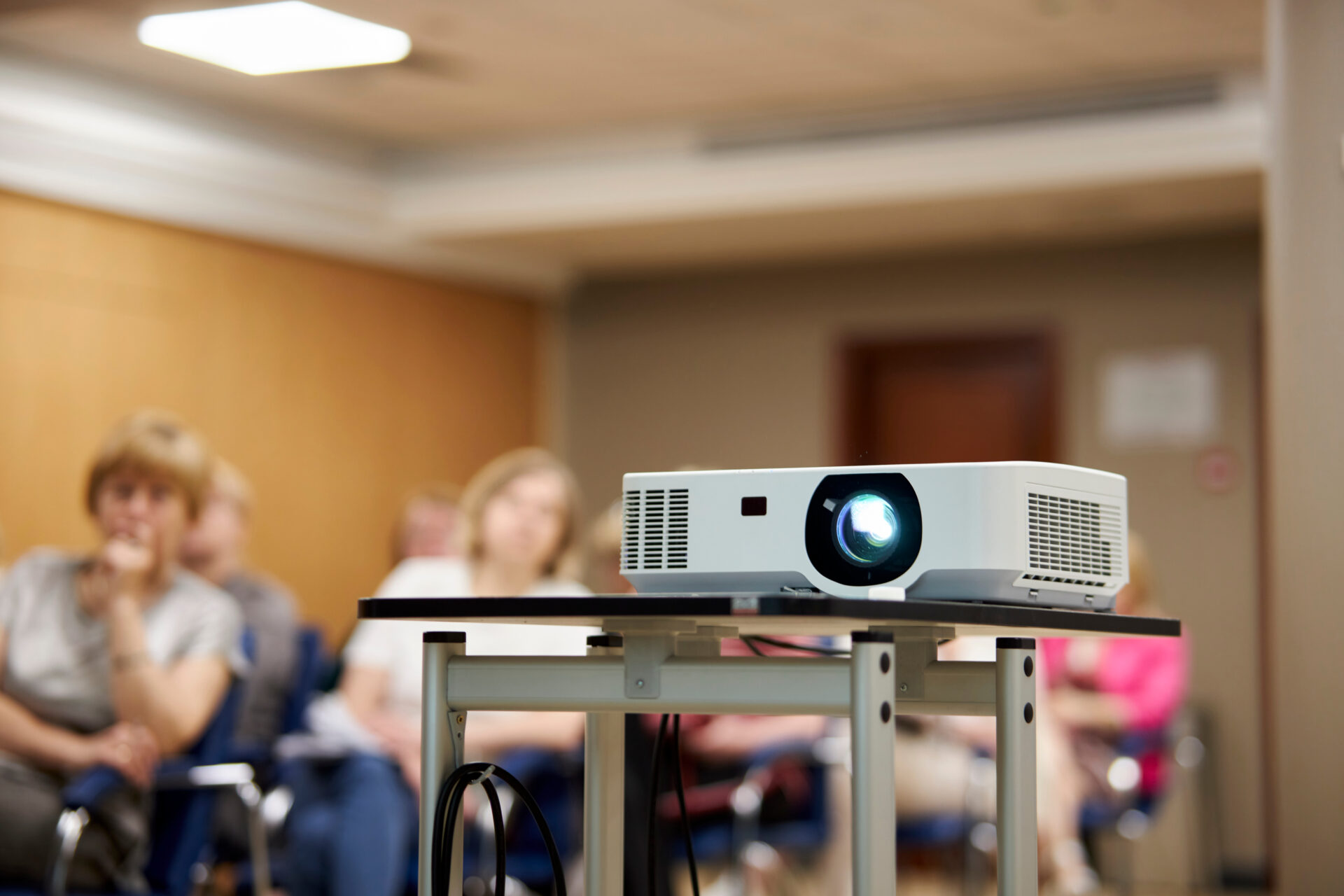
From presentations in conference rooms to immersive cinematic experiences in theaters, and large-screen entertainment at home, projectors play an essential role in delivering visuals on a big screen across a wide range of settings.
Dexerials' advanced inorganic optical technologies significantly enhance projector image quality, delivering clear and high-quality visual experiences. This article introduces the evolution of projectors and the technological capabilities behind our innovations.
Basic Structure of Projectors and Key Optical Components
Projectors are devices that use light to project images onto flat surfaces such as screens or walls, enabling large-format display. They are used in a wide range of settings, including conference rooms, classrooms, event venues, and homes. In recent years, compact and portable mobile projectors have emerged, offering greater convenience. Compared with TVs and large displays, mobile projectors provide flexible installation and easy access to large-screen viewing. Through its long-standing expertise in inorganic optical technologies, Dexerials has contributed to enhancing projector image quality and performance.

Projector Structure
Projectors produce bright, clear images through the coordinated operation of a light source, display panel, lens, and optical components such as polarizers, waveplates, and diffusers. The system is built around a light source that generates the light used for projection, using technologies such as lamps, LEDs, or lasers. The image processing unit then converts video signals into high-resolution images, using display panels based on technologies such as LCD (Liquid Crystal Display), DLP (Digital Light Processing), and LCoS (Liquid Crystal on Silicon).
The projection lens plays a critical role in enlarging and projecting light onto the screen, while the image signal processing circuit optimizes image quality through color correction and scaling. In addition, heat dissipation mechanisms, such as cooling fans, are essential to maintain stable operation.
Optical Component Performance Requirements in the Laser Light Source Era
Projectors are classified by light source type, with performance and applications varying accordingly, as outlined below.
Laser: Offers high brightness and long lifespan. As of 2024, it is estimated to account for approximately 30% of the market, with further growth expected. This light source enables vivid, high-resolution images and is driving the evolution of projectors.
LED: Energy-efficient and long-lasting, with suitability for compact and lightweight designs. Widely used in mobile projectors, it supports environmentally conscious product design and is suitable for a wide range of applications.
Lamp: Once the standard method, it requires periodic light source replacement over extended use. In recent years, the shift to laser and LED has accelerated, and it is gradually losing its position as the dominant technology.
Characteristics of Projectors by Display Method
Projector display technologies primarily include DLP and LCD systems.
DLP (Digital Light Processing): Offers high contrast and fast response, making it the leading technology with an estimated 60% market share. Widely used in mobile and home theater applications, it is valued for its immersive image performance.
LCD (particularly 3LCD): Known for natural color reproduction and high color saturation, with strong demand in business and education applications. Major Japanese manufacturers hold significant market share in this segment, meeting the need for high-quality visuals in conference rooms and classrooms.
High-Brightness Trends in the Projector Market and Emerging Needs
Projector use can be broadly categorized into the following three segments.
Business Use: Widely used for presentations in conference rooms and educational settings. However, as LCD/OLED (Organic Light-Emitting Diode) monitors become larger and more affordable, demand for entry-level projectors is declining. For screen sizes of 100 inches or more, projectors still offer a cost advantage over monitors, helping maintain stable demand. Going forward, advancements in fine-pitch LED displays are expected to deliver higher image quality at lower cost, intensifying competition with projectors.
Home Entertainment: Demand is expanding for movie viewing and gaming at home. The widespread adoption and increasing affordability of video streaming services for movies and TV series are driving market growth, positioning home projectors as a new option for a theater-like experience.

Mobile/Pocket Projectors: Popular for portability-focused use cases such as leisure, outdoor activities, travel, and business trips. Models with built-in speakers, smart TV operating systems, and automatic keystone correction are gaining strong support for their convenience. In recent years, relatively low-cost products from Chinese brands have been expanding their market share.
Projector Market Trends and Future Growth
According to a research firm*, the projector market reached a low point in 2023 following the COVID-19 pandemic and is now on a gradual recovery trend. It is projected to reach approximately 9.6 million units by 2029. Starting in 2024, the market is expected to show slight year-over-year growth, reaching the high 9 million unit range by 2028. The compound annual growth rate (CAGR) from 2023 to 2029 is estimated at approximately +1%.
In terms of sales, China accounts for approximately 50% of global demand. While B2B demand from government, education, and corporate sectors is shifting toward alternatives such as LCD/OLED monitors, B2C demand, particularly for home and pocket projectors, is continues to sustain the market.
*Source: Fuji Chimera Research Institute, "2024 Imaging & Sensing Market Comprehensive Survey"
Technology Trends in High-Brightness, High-Performance Projectors
The following trends are drawing attention as key drivers of projector evolution.
Higher Brightness and Image Quality: Support for 4K and HDR is expanding, and advances in light source technology are enabling unprecedented brightness and sharper image performance.
Enhanced Functionality: Projectors now feature a variety of user-friendly functions, including short-throw lenses, Wi-Fi and wireless connectivity, built-in smart TV operating systems, and automatic keystone correction. Short-throw lenses enable projection at closer distances, increasing installation flexibility. Wireless connectivity also reduces the complexity of cable management.
Lower Cost and Compact Designs: As technologies mature and economies of scale take effect, projectors are becoming more affordable and accessible for home use. Lightweight and compact models are also expanding use in mobile applications such as outdoor activities and business travel.
Dexerials' Inorganic Optical Technologies Supporting High-Reliability Projectors
In this growing projector market, Dexerials' inorganic optical components have been widely adopted in recent years as key elements supporting ongoing advancements. Conventional projectors typically used optical components made from organic materials such as films. However, in today's high-brightness projectors, inorganic materials have become the mainstream choice. This shift is driven by the superior durability of inorganic materials.
Laser light in high-brightness projectors carries high energy and generates significant heat in optical components. Components made from organic materials, such as polarizers, waveplates, and diffusers, have limitations in heat and light resistance. Over prolonged use, exposure to light can alter the molecular structure, leading to yellowing (discoloration) and degradation of image quality.
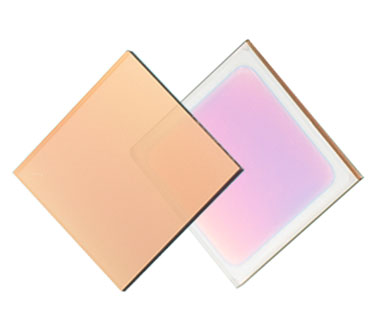
In contrast, glass-based inorganic optical components, such as the inorganic polarizers provided by Dexerials, offer high resistance to heat and light, and are far less susceptible to degradation caused by light exposure. As a result, they maintain stable image quality even in high-brightness environments.
Dexerials offers a broad lineup of products, including inorganic polarizers, inorganic waveplates, and inorganic diffusers, contributing to improved projector performance through inorganic optical technologies. For more details, please refer to the article below.
Enhancing Projector Brightness: Inorganic Optical Components
Related articles

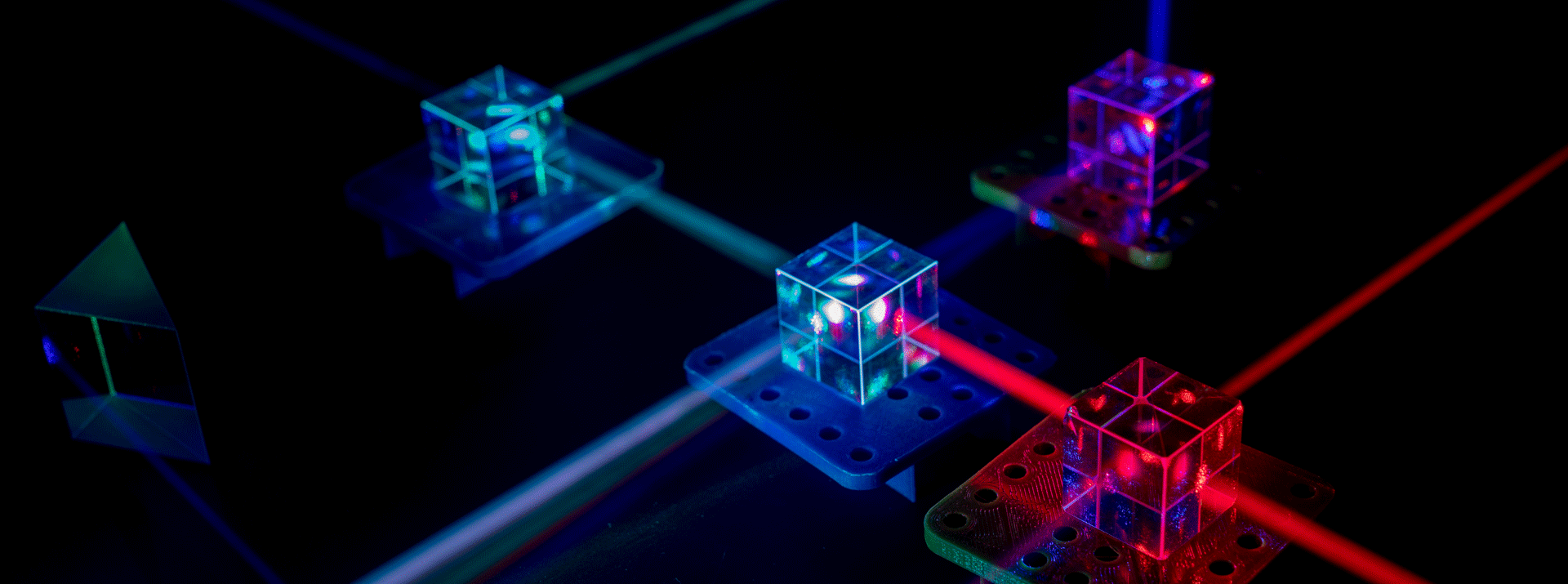


Dexerials is a materials manufacturer that produces materials essential for the evolution of devices and next-generation solutions.
We will create new value with partners around the world in areas including electronic components, bonding materials, and optical materials.
- Share
We provide materials on our products and manufacturing technologies.
They can be downloaded for free.
Download MaterialsRelated Products
Related articles
Popular articles related to optics











We provide materials on our products and manufacturing technologies.
They can be downloaded for free.
Download Materials