- Optical Products
Japan's Automotive Market: High Quality Standards Driving In-Vehicle Displays and Autonomous Driving
Series: "Future Vehicles"——Evolving automotive technologies around the world
This series presents automotive technology trends in four global markets through interviews with representatives from Dexerials' subsidiaries.
▶Japan | U.S. | Europe | China
目次
- 1Tackling the Japanese market's high quality standards
- 2 Trends and the characteristics of quality standards in the Japanese automotive market
- 3 Technical challenges of in-vehicle displays and initiatives in the Japanese market
- 4 Supporting autonomous driving sensor technologies and new solutions
- 5 8Role of the global headquarters in Japan and the initiatives of the AS Lab
- 6Column: AS Lab—An experimental facility that supports joint development with automotive companies
Tackling the Japanese market's high quality standards
Japan, a leading country in the global automotive industry, is home to Dexerials' Tochigi Technology Center, which serves as the headquarters for global strategy formulation and technology development. We spoke with Kentaro Oshima, Head of the Automotive Business Division, together with Kentaro Matsumoto and Masakatsu Wakairo from the technology development team, about the characteristics of the Japanese market and the company's initiatives.
Trends and the characteristics of quality standards in the Japanese automotive market
——What are the characteristics and strengths of Japanese automakers in the global automotive market?
Oshima: Above all, safety and quality standards are very high. While all Japanese automakers (OEMs) emphasize these values, leading manufacturers in particular maintain high quality standards, and the market is known for its intense cost competition. Japanese vehicles have long been valued worldwide or their reliability, maintaining performance—even after 10 to 15 years of use. This balance of affordability, quality, and performance is a key strength of Japanese automakers.
Matsumoto: A downside is that, because Japanese OEMs share a common commitment to safety and reliability as their top priorities, they require long verification periods before adopting new products. As a result, the adoption of cutting-edge technologies naturally takes time. However, once a product gains trust from Japanese OEMs, it becomes easier to deploy globally.
——What is Dexerials' business strategy in the Japanese automotive market?
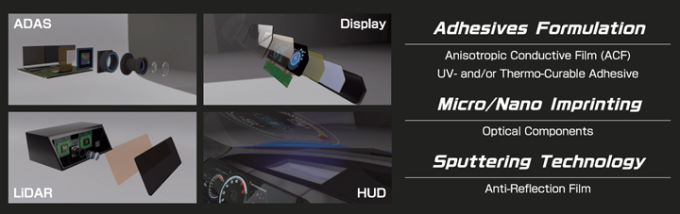
Oshima: As the automotive industry undergoes major structural changes driven by technological innovations such as electrification and autonomous driving, Dexerials is pursuing two core business strategies in the automotive sector. The first is to enhance the sophistication of in-vehicle displays, and the second is to provide solutions for autonomous driving, which is expected to reach widespread application in the near future.
In the Japanese market, we are focusing particularly on these two strategies. Japan is home to many automakers with significant global market shares, and by contributing to their manufacturing through our technologies, we aim to drive expansion into other regions.
Technical challenges of in-vehicle displays and initiatives in the Japanese market
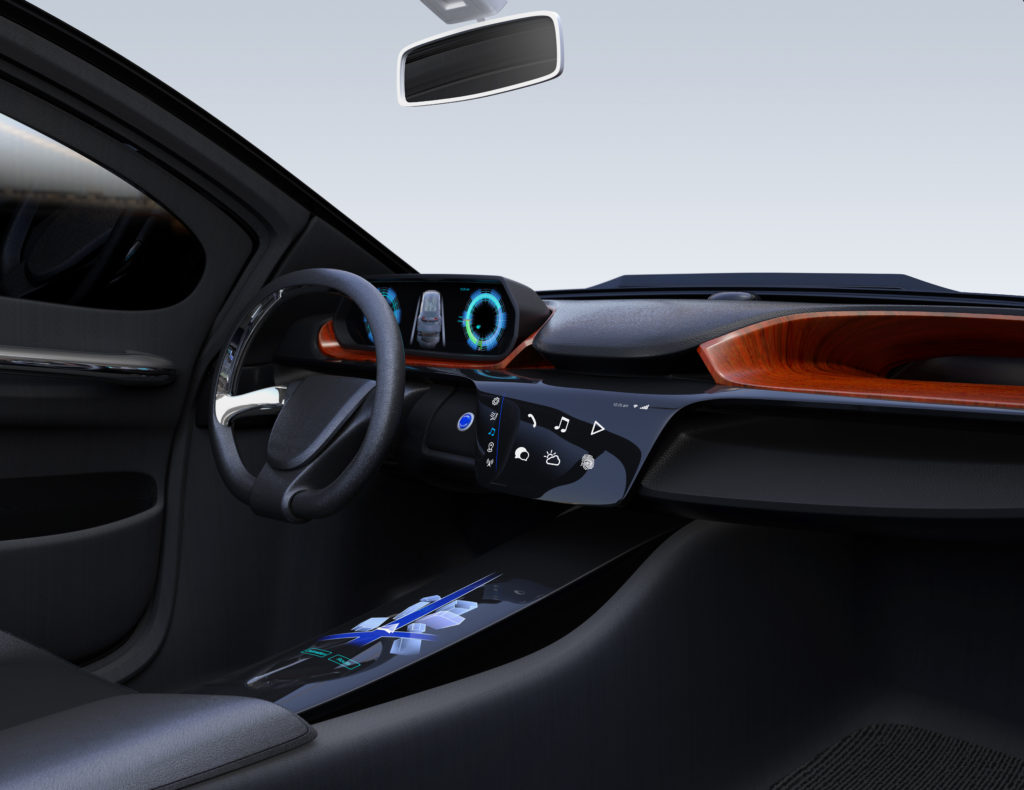
As automobiles become increasingly digitized, in-vehicle displays are becoming larger and more multifunctional. We spoke in detail about Dexerials' initiatives in the Japanese market.
——What kinds of technical issues are you receiving an increasing number of inquiries about regarding in-vehicle displays?
Wakairo: As displays continue to grow larger and their designs evolve, a variety of new challenges are emerging. For example, as cover glass becomes larger, it is more susceptible to physical damage. In addition, while most displays have traditionally been flat with a simple rectangular form, the adoption of curved and rounded displays is increasing rapidly.
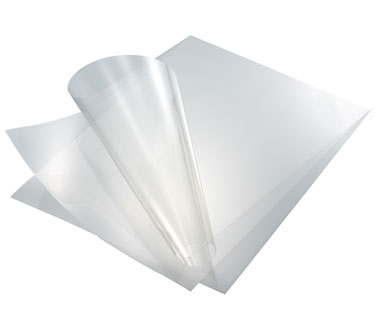
To bend glass, it must be made thinner, but thinner glass is also more susceptible to damage. As a result, there is a need for solutions that prevent glass from shattering in the event of an auto collision, to protect drivers and passengers. One such approach is the application of our anti-reflection film (ARF) to the display surface.
Matsumoto: Curving displays also introduces new challenges related to color and appearance. Anti-reflection film (ARF) consists of multiple layers with different light transmittance values and refractive indices. When the anti-reflective layer is bent, the reflected color seen from the front can differ from that seen from the curved side. Stylish displays may suffer from unintended appearance and color inconsistencies.
Oshima: This is where our expertise in precise optical design comes into play, enabling us to customize anti-reflection film (ARF) products to meet specific customer requirements. Specifically, we have developed technology that minimizes differences in reflected colors between front and side viewing angles on curved displays. In addition, we have established a reliably controlled manufacturing process for products that incorporate this function, enabling mass production.

Supporting autonomous driving sensor technologies and new solutions
As autonomous driving technology continues to evolve, demand for sensing technologies is increasing. We asked about the technological developments Dexerials is focusing on.
——What technologies is Dexerials focusing on in the field of autonomous driving sensors?
Matsumoto: In autonomous driving, the various sensors installed in a vehicle essentially play the role of a human's eyes. Data captured by these sensors is processed by AI, which analyzes the driving environment and controls the vehicle accordingly. Just as the human eye struggles in direct sunlight or backlighting, scattered light or optical noise interfere with sensor performance, negatively affecting the system's ability to detect obstacles, other vehicles, and pedestrians.
Because autonomous driving is a critical function that protects people's lives, sensors must operate properly under all conditions. For this reason, sensor manufacturers are working hard to reduce optical noise in cameras and on windshields. This is where Dexerials provides solutions.
Oshima: Specifically, we are applying our low-reflection technologies for displays, backed by a long track record of proven reliability and performance, to the sensing domain. We provide a package that combines anti-reflection film (ARF), optical elasticity resin (SVR), which eliminates interfacial reflections within displays, and precision adhesive technologies used in the manufacture of smartphone cameras.
Wakairo: In addition, we have independently developed technologies that provide both anti-fogging and anti-smudge functions by applying optimal coatings to materials. Preventing fogging and smudging on in-vehicle cameras and sensors helps maintain sensing performance when driving. We also offer a technology that combines anti-fogging and anti-reflection technologies by forming a "moth-eye structure"—a microstructure that mimics the surface of a moth's eye—on the material surface. This structure supports autonomous driving sensing in many directions.
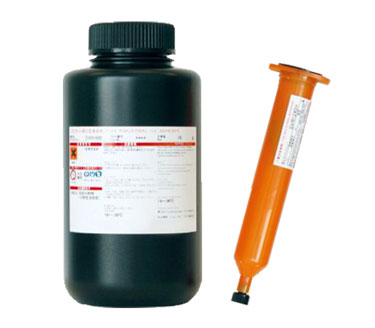
Oshima: In the area of precision adhesive technology, we are also developing a black adhesive. Conventional adhesives used to fix camera and sensor components in place are typically transparent, but by using a black adhesive and filler, we can absorb reflections inside the camera modules. By combining these technologies, our goal is to deliver a comprehensive solution that enhances overall sensing accuracy.

Role of the global headquarters in Japan and the initiatives of the AS Lab
Dexerials' Headquarters and Tochigi Technology Center serve as the control hub for the company's global automotive business strategy. We asked about the positioning of the Headquarters and Tochigi Technology Center and their initiatives.
——Please tell us about the positioning and role of the Headquarters and Tochigi Technology Center in Dexerials' global expansion.
Oshima: The AS Division, which provides solutions to automakers, is based at our Headquarters (Tochigi Technology Center) in Tochigi Prefecture and also serves as the control hub for global operations. In addition to proposing technologies to Japanese manufacturers, a key role of our team is to support and provide strategic direction to colleagues around the world. We collect information on trends among global OEMs and Tier 1 suppliers and share monthly strategic updates with members around the world.
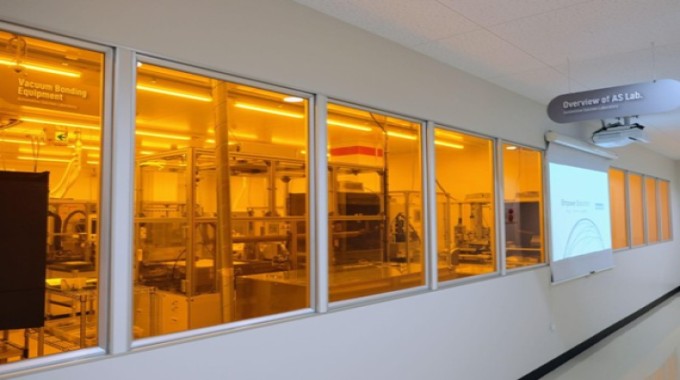
We also have a testing facility known as the Automotive Solution Laboratory (AS Lab), where we collaborate with our customers to develop cutting-edge displays. One of the most important missions of our Headquarters and Tochigi Technology Center is to invite engineers from OEMs in Japan and overseas to develop the displays of the future.
Dexerials has a long history in the consumer electronics business. Expanding into the automotive market represents a new endeavor for us. As mentioned earlier, the automotive industry demands long-term quality assurance and safety. We must therefore build a product development and manufacturing system that fully meets these requirements and can be deployed globally.
——Please tell us about the vision that Dexerials' Headquarters and Tochigi Technology Center have for realizing the future mobility society.
Oshima: Not only Japan but many other developed countries are facing population decline and an aging society. As the workforce inevitably shrinks, technologies that enable the cars of the future, such as autonomous driving, will be applied in a wide range of scenarios. In this near-future world, our technologies for improving sensing accuracy will be applicable not only to automobiles but also to mobile devices such as drones and robots.
Looking ahead, as autonomous driving becomes fully established, people will no longer need to drive and may be able to travel while watching videos in their vehicles. Our technologies will play a crucial role in enabling these future displays.
Column: AS Lab—An experimental facility that supports joint development with automotive companies

Dexerials' Headquarters and Tochigi Technology Center have established the AS Lab, an experimental facility that supports joint development with customers.
The AS Lab is a specialized experimental environment where customers can experience Dexerials' low-reflection solutions firsthand. Renovated in March 2023, the AS Lab is equipped with cameras on each piece of equipment, allowing overseas customers and those who cannot travel to the site to remotely monitor experiments online. A wide range of customers, including automotive OEMs, Tier 1 suppliers, and display manufacturers, visit the AS Lab to conduct technical verification together at various stages, from proof of concept (POC) to prototyping, while observing actual processes and materials.
Related articles
私たちデクセリアルズはデバイスの進化に欠かせない材料や次世代のソリューションを生み出す、マテリアルメーカーです。
電子部品、接合材料、光学材料をはじめと世界中のパートナーと新しい価値を生み出していきます。
- Share
We provide materials on our products and manufacturing technologies.
They can be downloaded for free.
Download Materials
We provide materials on our products and manufacturing technologies.
They can be downloaded for free.
Download Materials