
- Optical Semiconductor Products
Technological Innovations in Continuous Glucose Monitoring (CGM)

[Medical Content Disclaimer]
The content of this article is provided for general technical information and an overview of market trends. It is not intended to recommend or endorse any specific medical procedure, treatment, diagnosis, or prescription.
The information presented here is offered as a reference for healthcare professionals and medical device industry personnel. It is not intended for medical decision-making or use by general consumers.
Products, materials, and technologies described in this article may not necessarily be certified or approved as medical devices under applicable regulations, including the Pharmaceutical and Medical Device Act in Japan. Please confirm the relevant regulatory requirements and approval status in each country or region before actual use. The content is based on information available at the time of writing and may be subject to change without notice.
This disclaimer applies specifically to healthcare-related articles on TECHTIMES and is independent of the general “Disclaimer of Warranties” applicable to the website as a whole.
Contents hide
Introduction: Toward More Accessible and Accurate Glucose Management
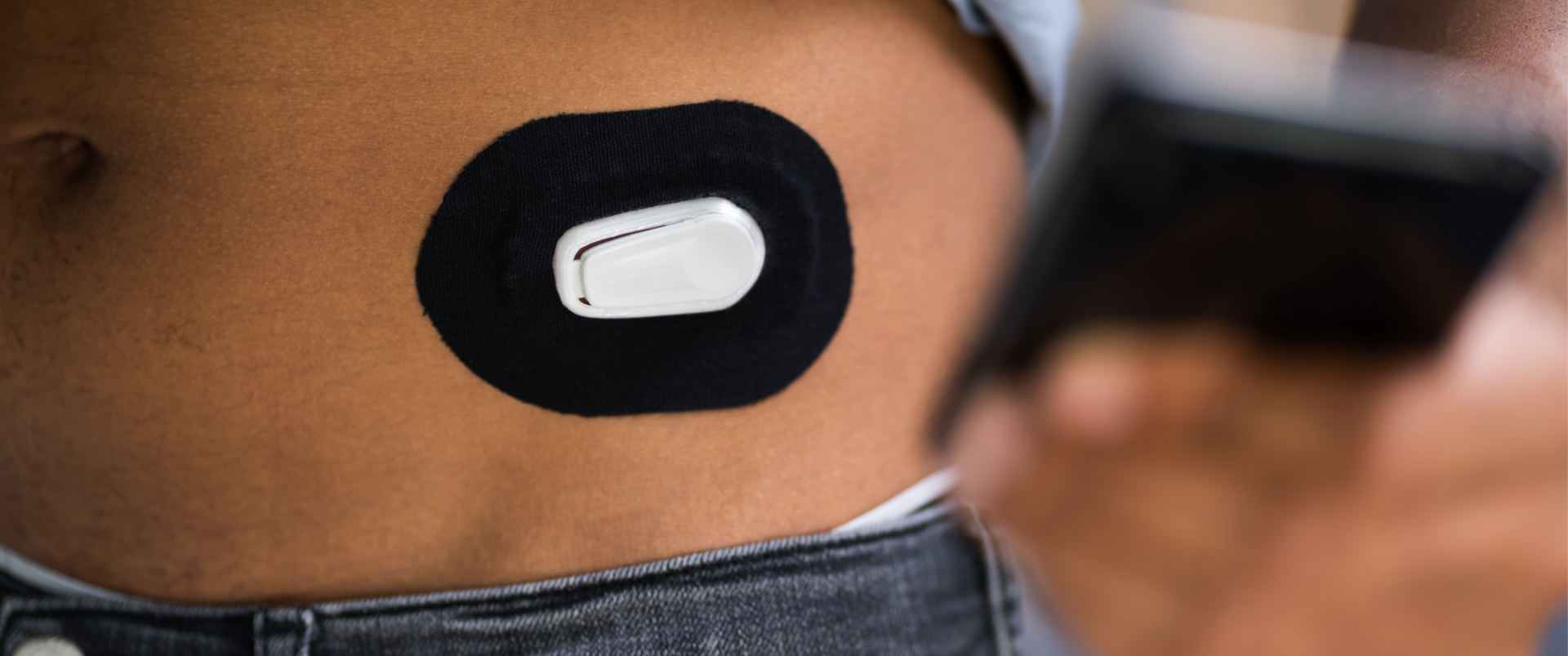
Glucose monitoring is an essential part of daily management for people with diabetes. In recent years, advances in continuous glucose monitoring (CGM) technologies have enabled more continuous and less invasive glucose measurement using wearable devices, contributing to improved quality of life for patients and reducing the burden on healthcare systems.
The Importance of Glucose Monitoring
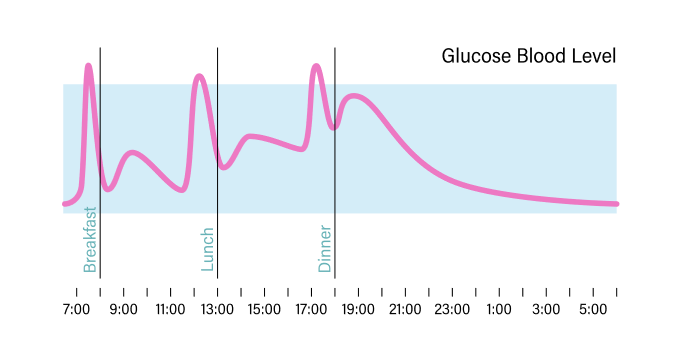
Glucose monitoring is a crucial aspect of managing health, not only for individuals with diabetes but also for those seeking to maintain optimal wellness. The process involves measuring glucose concentration in the blood, which fluctuates based on diet and physical activity. Typically, healthy blood glucose levels range from 70 to 100 mg/dL before meals and should remain under 140 mg/dL post-meal.
For individuals with type 1 or type 2 diabetes, managing blood glucose is a delicate balance influenced by diet, insulin regulation, daily routine and exercise.
About CGM
Traditionally, blood glucose levels have been monitored using a method known as self-monitoring of blood glucose (SMBG), which requires using a needle to prick the fingertips or other body parts before and after meals and before bed. Although SMBG devices have evolved to become smaller and less invasive, they can only provide single-point measurements, forcing patients to prick their fingertips multiple times a day and placing a significant burden on them.
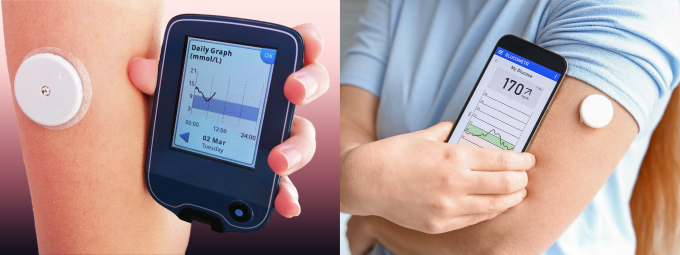
However, recent advancements have introduced CGM devices, which can measure and record blood glucose fluctuations continuously for up to two weeks. Used by patients with type 1 and type 2 diabetes, they utilize electrodes attached to areas such as the stomach or arms to provide continuous readings of interstitial fluid glucose levels, which closely correlate with blood glucose levels. CGM allows for real-time monitoring of blood glucose fluctuations, including diurnal trends, nighttime hypoglycemia, and postprandial hyperglycemia, which are challenging to detect with SMBG alone.
Moreover, CGM devices can be linked with dedicated applications, enabling remote monitoring and alert notifications via smartphones.
CGM technology is suitable for individuals such as:
- With type 1 or type 2 diabetes
- Using frequent insulin injections or pumps
- At risk for hypoglycemia or those unaware that they are hypoglycemic
- Experiencing significant blood glucose variability
- Who may benefit from sharing their glucose data
CGM represents a significant advancement in diabetes management, providing patients and healthcare professionals with valuable insights into blood glucose dynamics and facilitating informed treatment decisions.
Technical and Market Trends in CGM Technology
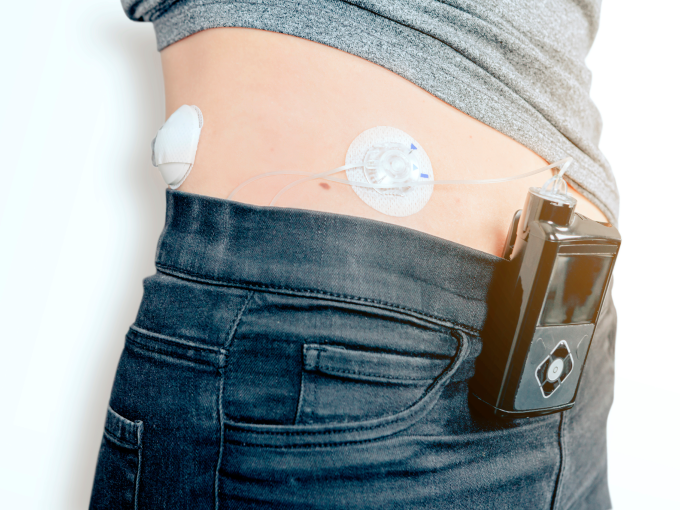
The development of closed-loop systems, also known as an artificial pancreas, which integrate CGM with an insulin pump, is progressing globally. Hybrid closed-loop insulin pumps already been introduced for patients with type 1 diabetes in the United States and Japan.
Recent research conducted by the University of Cambridge in the U.K. has demonstrated that artificial pancreas systems are also effective for patients with type 2 diabetes. The study reported outcomes such as doubling of the time spent within the target glucose range and a reduction in time spent at high blood glucose levels. These systems automatically adjust insulin delivery in response to changes in blood glucose levels, helping to minimize patient burden and reduce the effort required for daily self-management. Continuous blood glucose monitoring has emerged as a preferred alternative to traditional finger-prick meters, making things more convenient for diabetic patients. From conventional electrochemical-based sensors to novel optical and electrical glucose sensors, various promising glucose detection technologies are in development, signaling positive market growth.
The Growing Prevalence of Diabetes
According to the International Diabetes Federation (IDF), the global diabetes population reached 537 million in 2021, representing approximately one in ten adults worldwide. The figure is projected to rise to 783 million by 2045, with particularly rapid growth observed in low- and middle-income countries. Moreover, according to the World Health Organization (WHO), diabetes is projected to become the seventh leading cause of death by 2030, and its social and economic burden—including healthcare costs and productivity losses—is expected to continue increasing. In addition, the COVID-19 pandemic highlighted that inadequate glycemic control can increase the risk of severe outcomes from infectious diseases, leading to a renewed recognition of the importance of daily blood glucose management.
Dexerials' Role in CGM Innovation
As CGM adoption continues to expand and device performance advances, key technological themes have emerged, including device miniaturization, highly reliable electrical connections, and non-invasive sensing approaches.
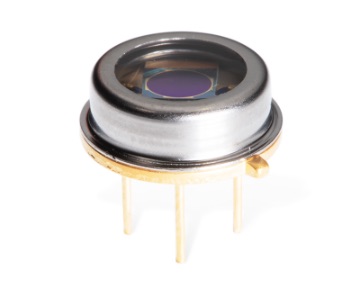
Dexerials’ anisotropic conductive film (ACF) is widely used to connect display components and internal circuitry in CGM devices, enabling both device miniaturization and high-density interconnection. In the United States, where wearable monitoring devices are required for insurance coverage, ACF contributes to the development of compact devices that patients can carry and use on a daily basis. In invasive CGM sensors as well, the use of ACF connection technology eliminates the need for traditional soldering and mechanical connectors, contributing to the miniaturization and weight reduction of sensor structures. In addition, as the shift towards non-invasive glucose sensors utilizing infrared technology continues to gain momentum, photodiodes produced by Dexerials Photonics Solutions are positioned to contribute to future sensor development as optical detection elements.
Dexerials continues to advance the miniaturization and performance capabilities of various devices, including those in the medical and healthcare sectors, and will continue to contribute to technological progress in CGM and related technologies.
Related articles
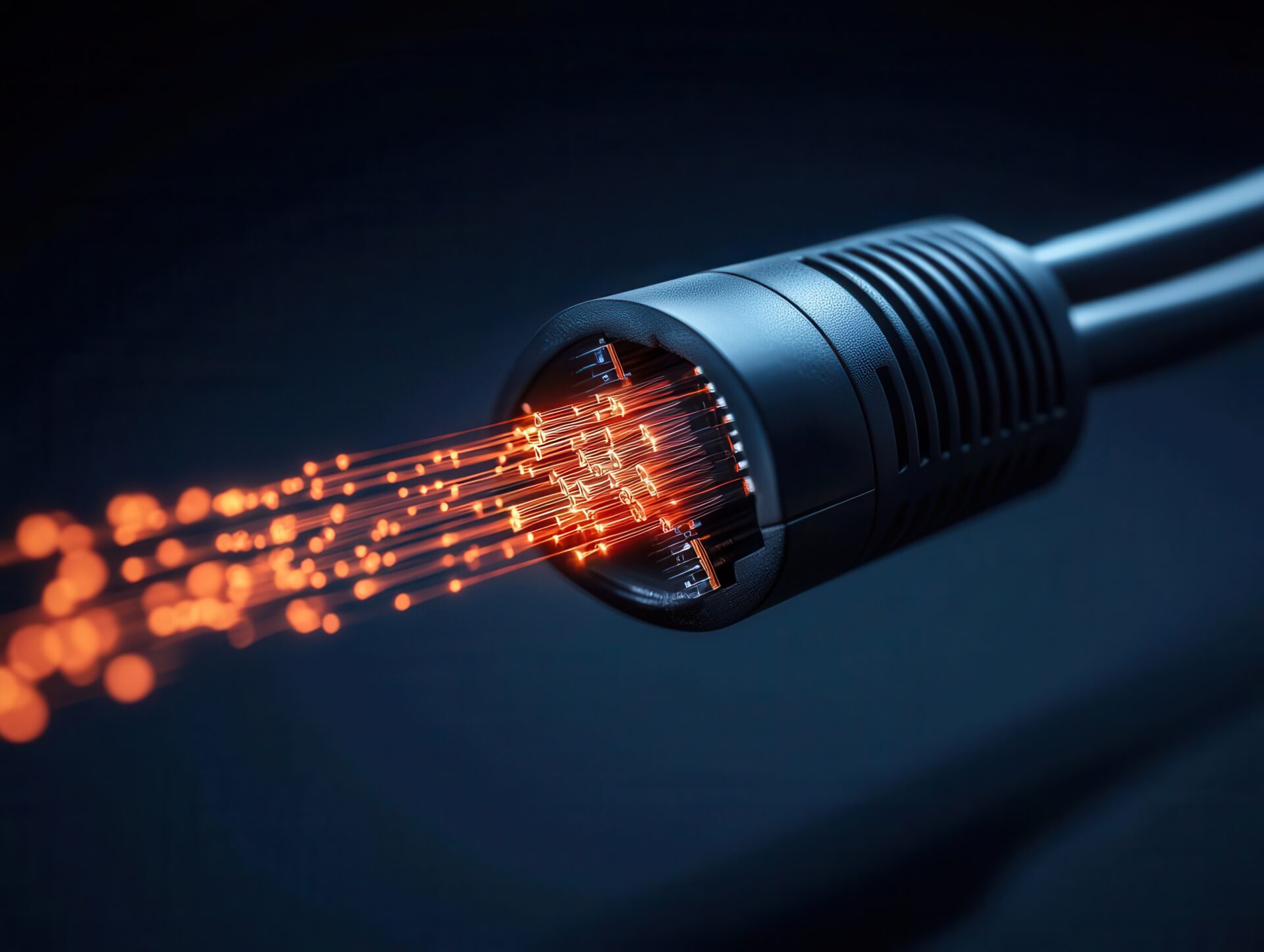



Dexerials are a materials manufacturer that produces materials essential for the evolution of devices and next-generation solutions.
We will create new value with partners around the world in areas including electronic components, bonding materials, and optical materials.
- Share
We provide materials on our products and manufacturing technologies.
They can be downloaded for free.
Download MaterialsRelated Products
Related articles
Photonics Popular Articles








We provide materials on our products and manufacturing technologies.
They can be downloaded for free.
Download Materials