
- Optical Products
Biomimetics Basics and Applications: An Introduction to Engineering Applications Such as the Lotus Effect and Riblet Structures

目次
- 1. What is biomimetics?
- 2. Examples of Biomimetics in Everyday Life
- 2.1 The Lotus Effect: Self-Cleaning Surfaces Inspired by Nature
- 2.2 Honeycomb structures
- 2.3 Shark skin inspires riblet processing
- 2.4 Bone structure inspires lightweight, high-strength materials
- 2.5 Desert insect cuticle inspires heat-resistant structures
- 2.6 Coral grooves inspire battery cooling plate design
- 2.7 Gecko foot structure inspires adhesive tape
- 2.8 Mosquito proboscis inspires painless needles
- 2.9 Surface structure of cicada wings inspires antibacterial technology
- 2.10 Spider silk inspires conductive fiber
- 3. Recent trends in biomimetic technology
- 4. Anti-Reflective Moth-Eye Structure Technology and Its Applications
What is biomimetics?
Biomimetics is the practice of emulating traits and survival strategies developed by living organisms through millions of years of evolution to address human challenges.
Since life appeared on Earth approximately 3.8 billion years ago, it has undergone surprisingly efficient and refined evolution to survive. Over time, humanity has adopted advantageous adaptations from those life forms, integrating them into civilization in myriad ways.
For example, when humans wanted to fly they first referenced the wings of the birds that soared freely through the skies. During the Renaissance of the 15th and 16th centuries, Leonardo da Vinci observed flying birds and insects to try to discover the secret of flight. In 1853 the English engineer George Cayley focused on the gliding motions of seagulls to develop the glider, and records show that a pilot managed to fly more than 100 meters. Later, others such as the German scholar Otto Lilienthal made improvements to the glider to increase flight distance, ultimately leading to the first successful flight of a manned, powered airplane by the American Wright brothers in 1903.
Aside from flight, other natural mechanisms such as those found on lotus leaves, moth eyes, gecko feet, and many others have inspired various technological innovations. In engineering, biomimetics transcends the mere emulation of physical appearance to uncover principles, recreate functionality, and create applications. Designers and engineers can draw inspiration from blueprints found in nature to achieve benefits such as greater durability, improved efficiency, and reduced material consumption.
Examples of Biomimetics in Everyday Life
Next, let’s explore some practical applications of biomimetics that have transformed modern technology.
The Lotus Effect: Self-Cleaning Surfaces Inspired by Nature
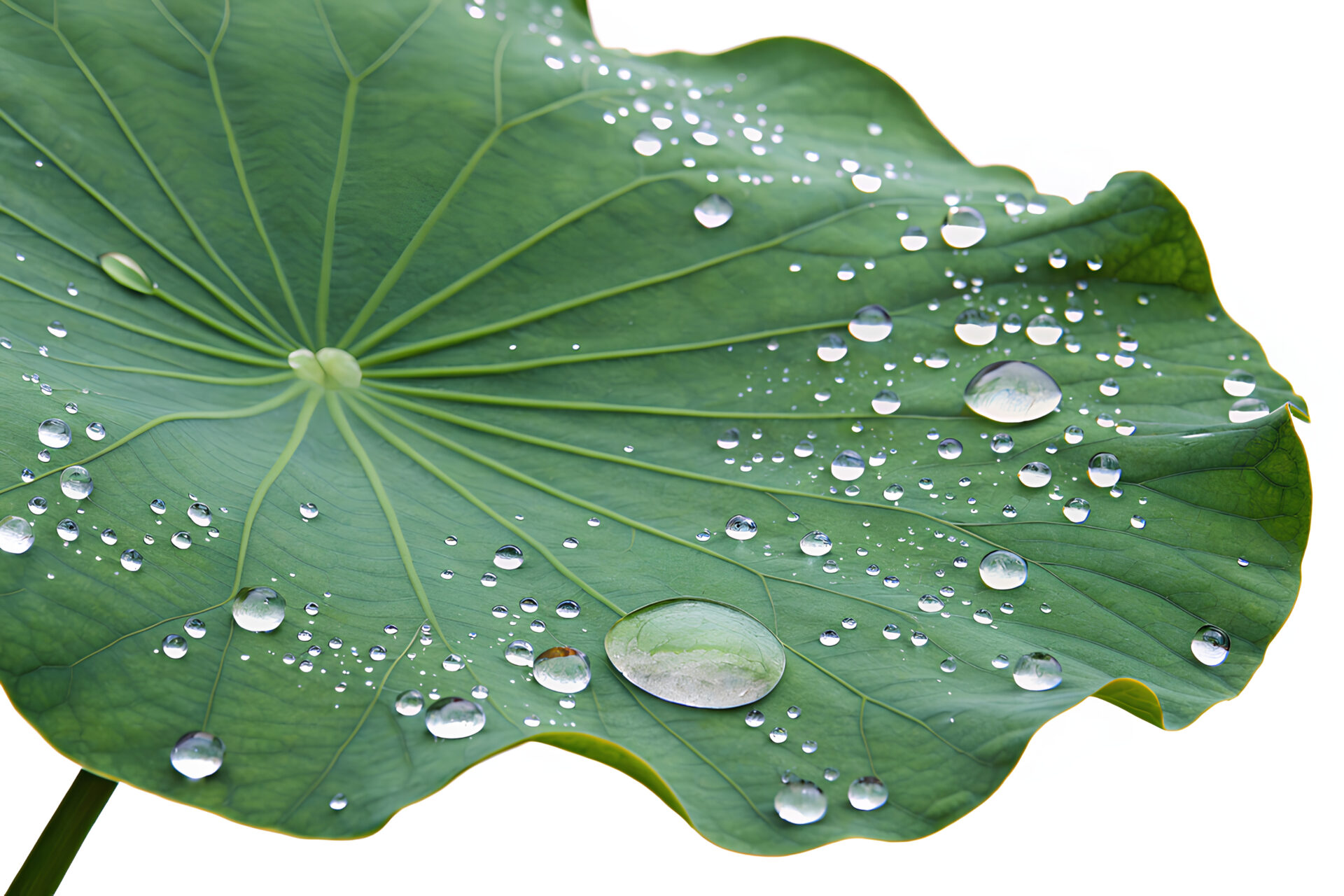
The lotus grows in muddy swamps, but the surface of its leaves always shines brightly, and droplets of water form mercury-like spheres that roll away smoothly. The droplets pick up grit and dust as they roll, leaving the leaf clean. What make this self-cleaning mechanism possible are the micro- and nanoscopic structures on the leaf’s surface and hydrophobic wax. This is so-called “lotus effect” has found applications in various fields such as yogurt lids and materials used in building external walls. The primary characteristics of the lotus effect are as follows:
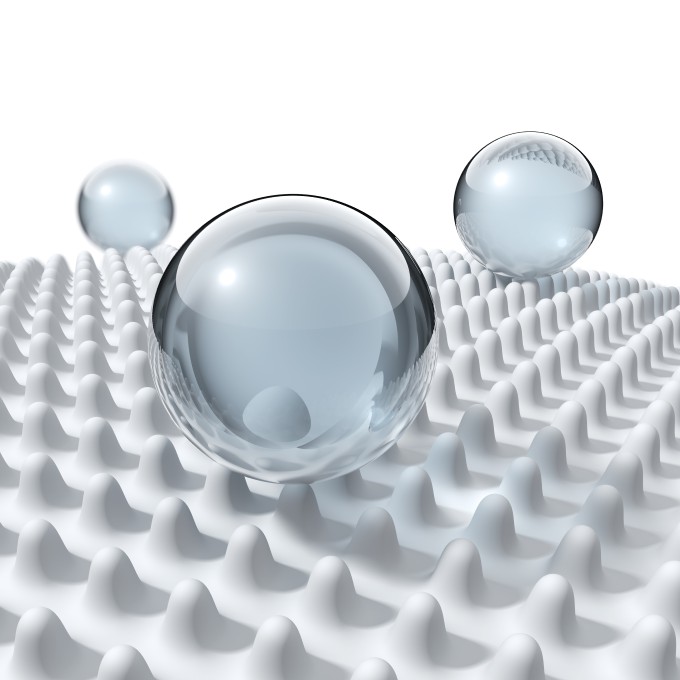
- Ultrahydrophobicity: The surface is covered with extremely small structures (structures called micropapillae topped with nano-scale wax crystals) that minimize the contact surface between the structures and water droplets. As a result, droplets form spheres on the ultrahydrophobic leaf surface with contact angles greater than 150℃.
- Self-cleaning functionality: As water droplets form spheres and roll away, they attract and carry surface dirt with them. This effect enables the plant to keep its leaf surfaces clean.
- Low friction: A thin air layer formed by the micro- and nanoscopic structures reduces surface friction.
Applications of the Lotus Effect
Technologies that emulate the structure of the lotus leaf have already been incorporated into many products we use in our everyday lives.
- Automotive glass coating: Windscreen treatment that repels rainwater and makes it easier to see
- Architectural exterior materials: Exterior wall paints and window glass that are dirt-resistant and can be cleaned naturally by rain
- Medical devices: Surfaces that inhibit bacterial adhesion
- Functional Clothing: Water and stain-repellent fabrics
Honeycomb structures
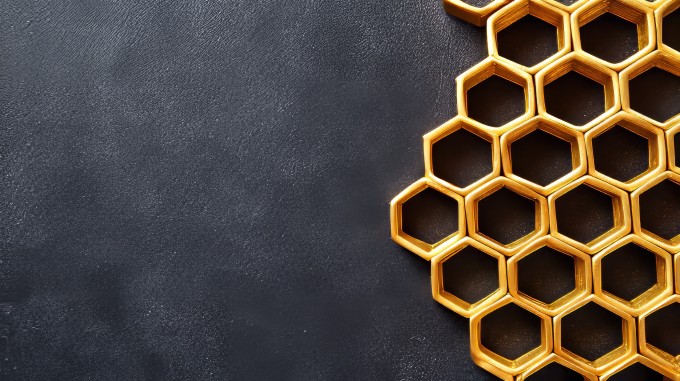
Honeycomb structures emulate the repeating hexagonal pattern found in beehives. This arrangement of hexagonal cells is one of the most material-efficient structures found in nature. The main characteristics are as follows:
- Extremely high strength-to-weight ratio: Provides excellent rigidity while minimizing material use.
- Shock absorption: Upon impact, the hexagonal cells deform to disperse and absorb the energy for outstanding shock absorption.
- Thermal insulation and heat distribution: The layered cell structure with air pockets offers advantages for both insulation and thermal management.
Industrial applications
Honeycomb structures have been adopted for use in various industries.
- Aeronautics: Used in structural components for aircraft and spacecraft to create lightweight but rigid parts
- Automotive: Applied to shock-absorbing structures and body reinforcement materials
- Architecture: Utilized in insulating panels and lightweight yet strong construction materials
- Electronic devices: Heat-sink structures to raise heat dissipation efficiency
Shark skin inspires riblet processing
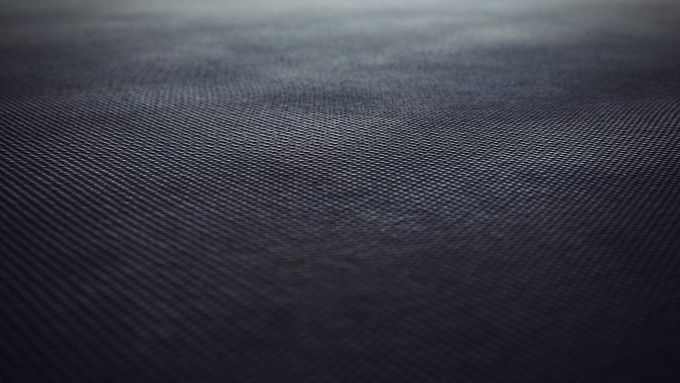
The surface of shark skin features a series of minute, longitudinal grooves that form what is called a riblet structure. They reduce water resistance and enable efficient, high-speed movement through the ocean. Aircraft manufacturers are currently developing shark skin-inspired film with minute structures for application to aircraft surfaces to reduce drag and improve fuel efficiency. The riblet structure is said to have the potential to reduce aerodynamic resistance by up to 8%, which could lead to significant fuel savings.
Bone structure inspires lightweight, high-strength materials
The insides of animal bones contain sponge-like porous structures (trabeculae) that are lightweight but also provide high strength. Light and tough materials emulating this structure are finding use in automotive chassis, aircraft wing and fuselage frames, and more. Furthermore, the porous structure of bone absorbs and distributes impact. Emulating this in bone-like structures and metal foam for automotive bumpers and frames holds the potential to efficiently absorb impact energy and improve safety for vehicle occupants.
Desert insect cuticle inspires heat-resistant structures
Desert-dwelling insects have developed special cuticle structures to survive in such extreme an environment where temperatures can exceed 50℃. For example, the Saharan silver ant from the Sahara Desert efficiently reflects visible and near-infrared sunlight (700 to 2,500 nm) using the silver hair structures and triangular protrusions on its cuticle. Research has shown that this structure diffuses and reflects at least 90% of sunlight and minimizes heat absorption to reduce body temperature by approximately 10℃. A nanostructured coating developed to emulate this has been reported to increase solar reflectance and reduce building surface temperatures by 15 to 20℃.
Coral grooves inspire battery cooling plate design
Coral has a complex grooved structure that promotes heat exchange through water flow by increasing surface area. It is reported that an automotive battery cooling plate that emulates these coral grooves improves cooling performance by 10% over conventional products and reduces pressure loss by 20%. These improvements have the potential to shorten charging times and extend battery life by moving the battery closer to the optimal temperature range of 20 to 40℃.
Gecko foot structure inspires adhesive tape
Geckos can walk on walls like ninjas thanks to the nanoscale hairs on their feet that enable strong, molecular-level adhesion through van der Waals forces. These structures have been applied to the development of tape to secure analytical materials for scientific experiments. Because the tape is non-toxic, reusable, and leaves no residue, it is used to secure analytical samples for scanning electron microscopes, etc.
Mosquito proboscis inspires painless needles
The mosquito’s proboscis penetrates skin with little resistance to suck blood thanks to its multiple sharp needles and jagged structure. This mechanism is being applied to develop pain-free syringe microneedles.
Surface structure of cicada wings inspires antibacterial technology
The surface of cicada wings is covered with a nanopillar structure that physically ruptures bacterial membranes to prevent adhesion. Antibacterial film that emulates this structure has been confirmed to have physical antibacterial properties without using chemical germicides, and is now being used in the field of medicine.
Spider silk inspires conductive fiber
Spider silk is stronger than steel and highly elastic owing to its nanoscale hierarchical structure. Fibers are in development that emulate these characteristics by integrating conductive polymers and carbon nanotubes into spider silk structures. Expectations are that this will lead to lightweight and durable sensors and wearable devices.
Recent trends in biomimetic technology
Recent advances in applying biomimetics to industrial products have given rise to the following trends:
Changes driven by ultrafine structures
Advances in microfabrication technology have made it possible to recreate biological structures on a smaller scale than ever before. The ability to reproduce fine biomimetic surface structures with unprecedented precision and apply them in a wide variety of academic fields such as physics, optics, and fluid mechanics has triggered the creation of innovative products.
Multifunctional material development
Tissue from organisms that live in extreme environments can have multiple simultaneous functions such as thermal insulation, surface protection, water repellency, and antibacterial properties. The development of materials that emulate these organisms is driving progress in materials with those organisms’ characteristics such as detecting and responding to environmental changes, or combining both water-repellent and antibacterial properties.
Adding self-healing properties to materials
The bodies of living organisms can heal themselves when damaged. Inspired by this biological self-healing mechanism, some researchers are considering the potential for extending product lifespans and reducing the need for maintenance by developing polymers and composite materials that have self-healing functionality.
Ultra-efficient energy use
In nature, all forms of life sustain biological activity through extremely efficient chemical use of the energy they take in through sources such as food or sunlight. New energy systems that do not rely on conventional fossil fuels or electricity are being researched by applying these efficient biological energy systems.
Anti-Reflective Moth-Eye Structure Technology and Its Applications
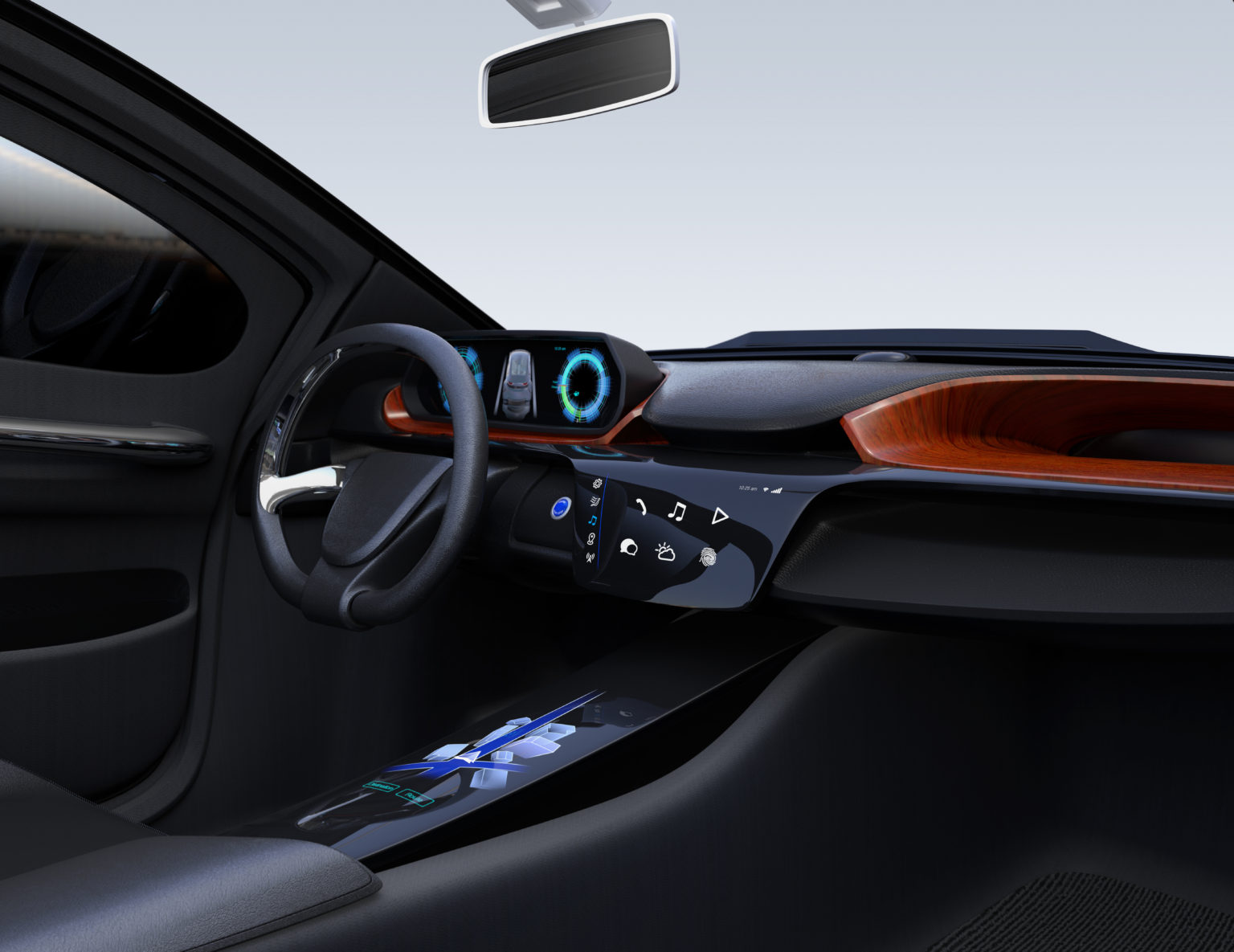
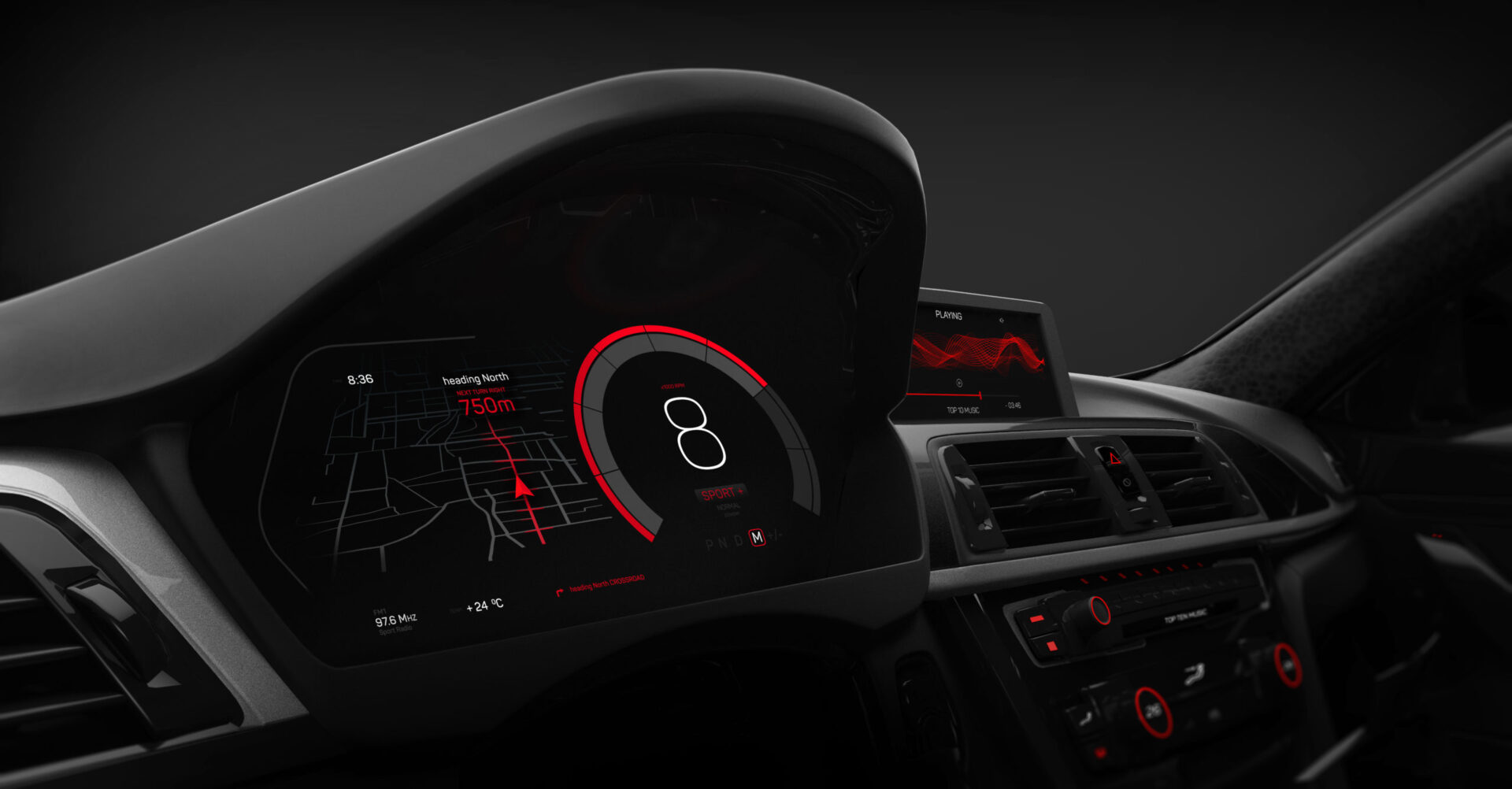
With its track record in materials development, Dexerials leverages these biomimetic concepts in product designs. One example is our moth-eye type anti-reflection film. Using micromachining technology, one of our core enabling technologies, we create moth-eye structures that mimic the microscopic surface of a moth’s eye. This product is used in automotive displays and head-up displays for its excellent anti-glare properties.
Moth-eye structures: The ultimate anti-reflection technology
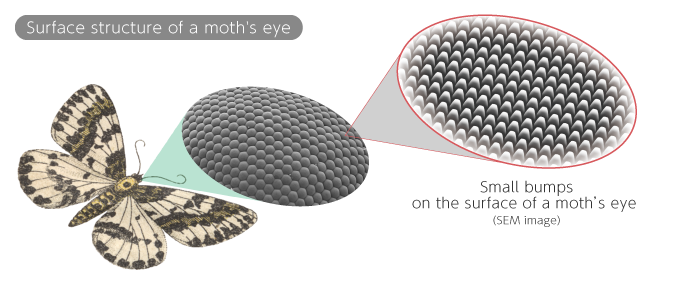
In addition, our anti-reflection film moth-eye type has also been commercialized as the medical face shield DxShield. This face shield is widely used by many doctors during long surgeries because it reduces glare and resists fogging.
Advantages of medical shields with moth-eye type anti-reflection film
For more details on Dexerials’ micromachining technology that makes these products possible, see the following article.
Transparent anti-reflection film—the latest in microstructure technology
By integrating biomimetics into product design, engineers can leverage mechanisms that life forms developed through evolution to solve a wide range of problems. Dexerials will continue to pursue new biomimetic technologies together with our customers by combining technologies that include micromachining, sputtering, organic material compounding, and more.
Related articles



Dexerials are a materials manufacturer that produces materials essential for the evolution of devices and next-generation solutions.
We will create new value with partners around the world in areas including electronic components, bonding materials, and optical materials.
- Share
We provide materials on our products and manufacturing technologies.
They can be downloaded for free.
Download MaterialsRelated Products
Related articles
Popular articles related to optics







We provide materials on our products and manufacturing technologies.
They can be downloaded for free.
Download Materials