
- Elemental Technologies
Features and benefits of a UV-curable emergency leak repair material for quick response to oil leaks in production equipment

目次
- 1. Damage Caused by Oil Leaks from Aging Equipment
- 2. UV-Curable Leak Repair Material Addressing Limitations of Conventional Materials
- 3. Repair Mechanism of UV-Curable Leak Repair Material
- 4. Differences from Conventional Repair Materials
- 5. Reduced Curing Time and Adhesion to Oily Surfaces—Dexerials Technology
- 6. Long-Term Oil Resistance and Easy Application and Removal
Damage Caused by Oil Leaks from Aging Equipment
Production equipment inevitably deteriorates over prolonged use, making regular maintenance essential.
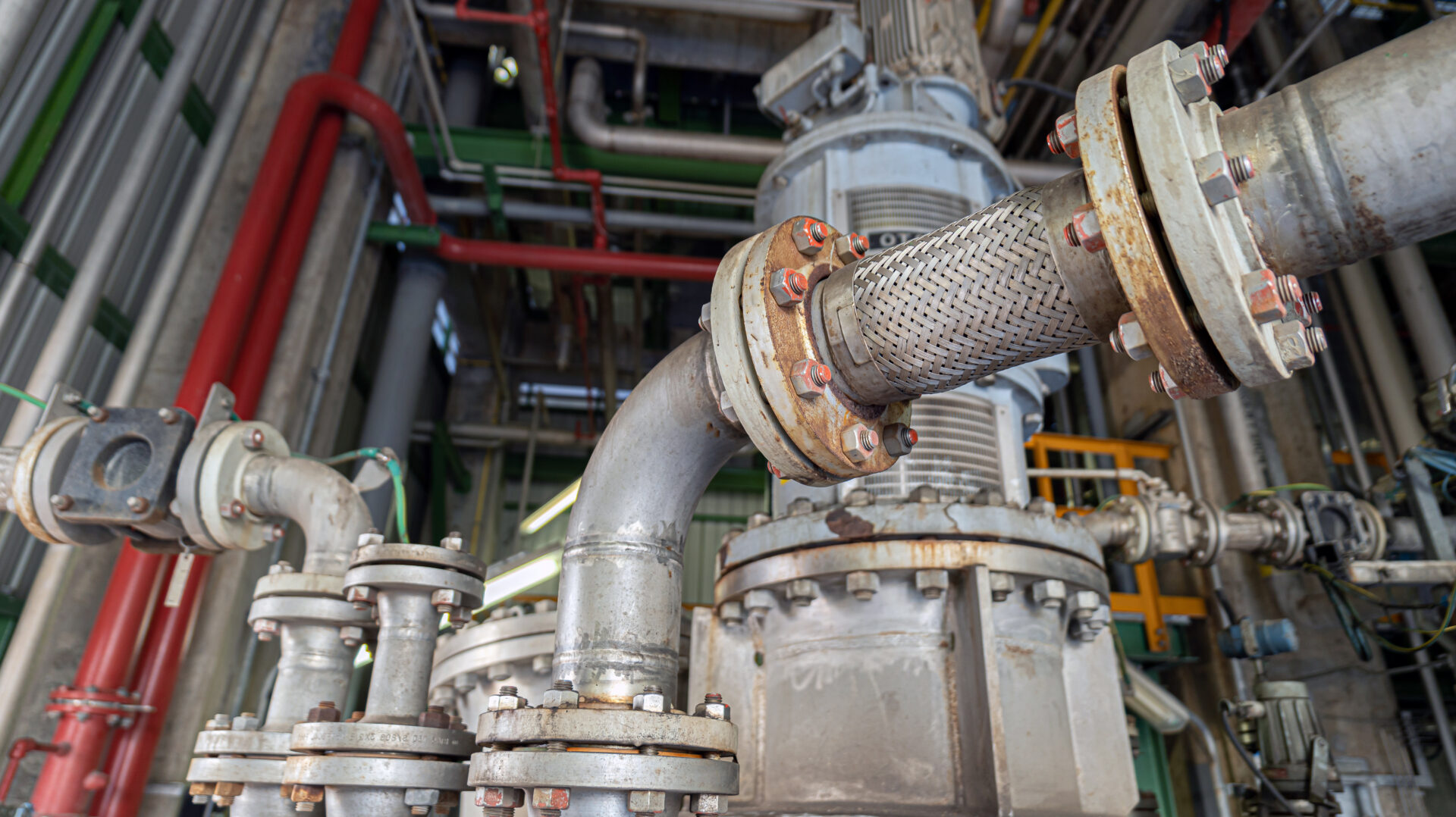
In particular, substation equipment used by electric power companies, steelmakers, petrochemical companies, and similar operations can develop leaks of insulating oil used for insulation and cooling (hereafter referred to as "oil leaks"), caused by pipe corrosion or gasket deterioration at connection points such as flanges and valves.
If left unchecked, oil leaks can go beyond mere oil loss and cause equipment malfunctions. In serious cases, they can lead to environmental contamination both inside and outside the facility, resulting in unforeseen damage. For this reason, oil leaks require a swift and effective response.
However, permanently repairing the source of a leak requires a full equipment overhaul, which involves significant time and expense. As an interim measure until a permanent fix can be carried out, emergency repairs using sealants and similar materials to seal the leak site are widely practiced.
UV-Curable Leak Repair Material Addressing Limitations of Conventional Materials
Currently, the most widely used materials for emergency oil leak repairs are two-part epoxy repair compounds. These compounds have been broadly adopted for emergency repair applications because they offer excellent mechanical strength and durability after curing and are relatively inexpensive and easy to obtain. However, since they were not originally designed as oil leak repair materials, they have drawbacks: they do not adhere well to oil-covered surfaces, and they take a long time to cure. There have also been reports where sealing was incomplete, which led to the creation of new oil pathways, resulting in recurring leaks.
To address these challenges, we have drawn on our extensive experience with UV-curable acrylic resins in the electronics sector (for smartphones, laptops, and other devices) to develop a single-component UV-curable leak repair material designed for oil leaks, but that can be used for other types of leak repair.
The key features of our UV-curable leak repair material, developed to deliver optimal performance for emergency repair of oil leaks in electrical equipment and similar applications, are as follows.
- Adheres even when some oil remains on the surface
The repair material itself has properties that allow it to be compatible with oil. By absorbing the oil, the material achieves close contact with the bonding surface of the pipe or other substrate. - Rapid curing through UV irradiation
The repair material cures rapidly when irradiated with UV light, preventing the formation of new oil pathways. At the same time, it significantly reduces repair time compared to epoxy-based repair compounds.
Repair Mechanism of UV-Curable Leak Repair Material
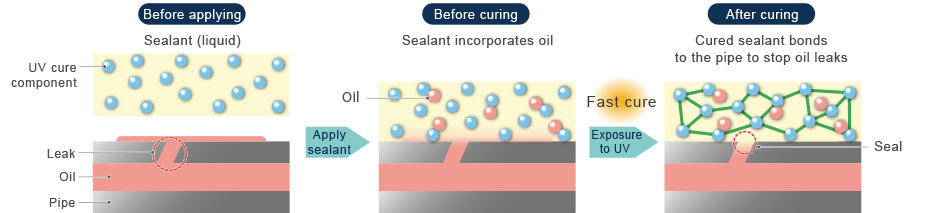
Because the UV-curable repair material has properties that allow it to be compatible with oil, it absorbs the oil present on the substrate into the resin, transforming the bonding interface from a separated state of "repair material and oil film" to a bonded state of "repair material and substrate." This enables the repair material to firmly adhere to piping and other surfaces, effectively sealing the leak. Additionally, because the material cures immediately upon UV exposure, the leak site can be sealed before new oil pathways have a chance to form.
Differences from Conventional Repair Materials
The table below compares the features of our UV-curable leak repair material with those of conventional repair materials. The most important differences are the two defining characteristics of our product: fast curing and adhesion to oily surfaces.
| Category | Our Leak Repair Material | Conventional Repair Materials |
|---|---|---|
| Type | Single-component UV-curable acrylic | Two-part epoxy |
| Curing time | Seconds after UV irradiation | Minutes to days after mixing |
| Weighing/measuring | Not required | Required |
| Adhesion to oily surfaces | Yes | No |
| Pros | • Adheres even when oil is present on the surface • Optimal flowability for application • Rapid curing with UV irradiation • Easy removal after repair | • No special tools required other than a scale • High durability |
| Cons | • Requires a UV light source • Areas not exposed to UV light will not cure • May cure under ambient light, requiring careful handling | • Requires precise mixing ratio • Does not adhere to oily surfaces • Application must consider pot life • Difficult to remove after repair |
* For detailed inquiries about our leak repair material, please visit the website of our sales partner, AirMore Co., Ltd., and specify the product name "LeakAID."
Reduced Curing Time and Adhesion to Oily Surfaces—Dexerials Technology
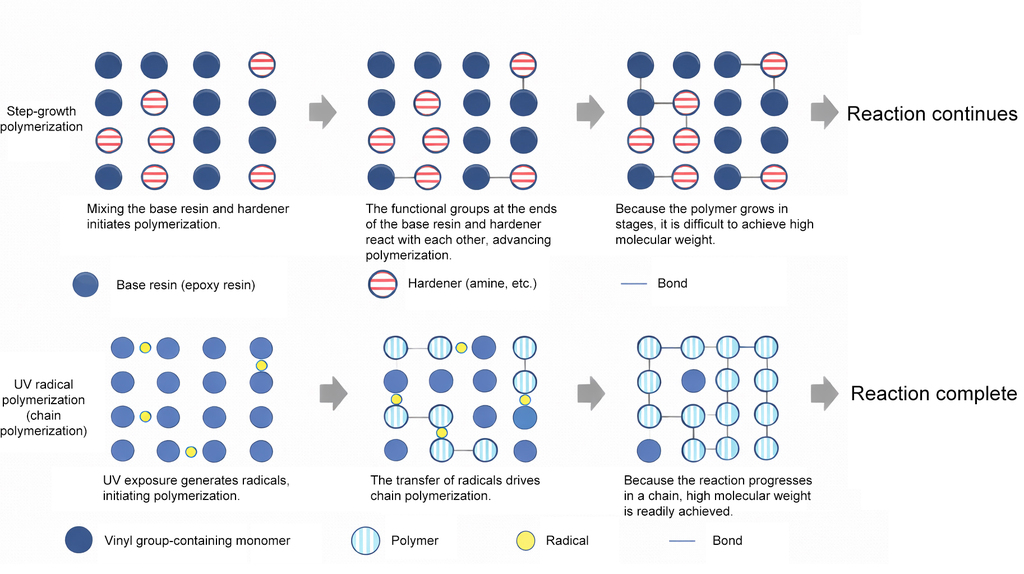
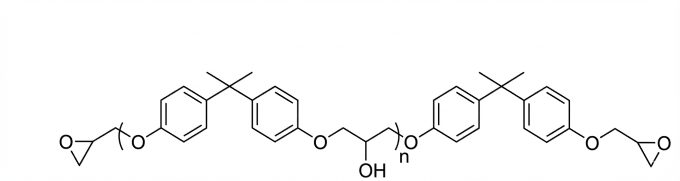
Conventional two-part epoxy resins cure through step-growth polymerization, in which the functional groups of the base resin and hardener react progressively, a process that requires considerable time. They also require precise proportioning and thorough mixing of the base resin and hardener; any deviation in the mixing ratio can lead to incomplete curing or reduced adhesive strength. Furthermore, pot life (usable time) imposes constraints on working time.
In contrast, our leak repair material uses a single-component UV-curable acrylic resin. Irradiation with UV generates radicals that trigger a chain polymerization reaction, resulting in extremely rapid curing. Another major advantage is that curing is initiated by UV irradiation, the timing of curing can be freely controlled.
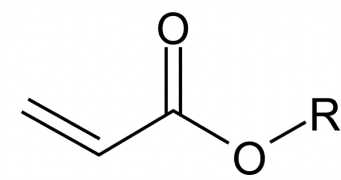
In addition, conventional two-part epoxy resins have high polarity, which makes them less compatible with low-polarity oil films and therefore difficult to bond to oily surfaces. Our product, by contrast, is a single-component repair material based on acrylic acid esters, which allows a wide variety of functional groups to be introduced into the side chains, allowing a high degree of design flexibility. Leveraging this characteristic, our proprietary formulation technology ensures that the material blends readily with oil films before curing, achieving close contact with the substrate and enabling adhesion even on oil-covered surfaces.
Long-Term Oil Resistance and Easy Application and Removal
After curing, the UV-curable repair material forms a polymer with high molecular weight and high crosslink density, which minimizes intermolecular gaps. This makes it difficult for oil molecules to penetrate the material, ensuring that the oil-sealing performance is maintained over the long term. We have conducted testing in accordance with JIS K 7114, which confirmed that the oil absorption rate of our leak repair material after curing is less than 0.5 wt% in insulating oil A,
an extremely low level that demonstrates its strong oil resistance.
Furthermore, by designing the material with an optimal viscosity for easy application, we have achieved flow characteristics that resist dripping even when applied to vertical surfaces. If the cured sealant needs to be removed at a later stage after repair, it can be easily removed by applying impact through chipping or similar methods.
In this way, the UV-curable leak repair material delivers strong performance even on equipment where complete removal of oil films is difficult, or on infrastructure with complex structures that are challenging to repair. We continue to develop adhesion technologies for these types of applications, and offer individualized technical consultations.
Sales of the UV-curable leak repair material introduced in this article are handled through our sales partner, AirMore Co., Ltd. For product details or purchasing inquiries, please contact the distributor via their website. (https://n-airmore.com/leakaid/)
Related articles

Dexerials is a materials manufacturer that produces materials essential for the evolution of devices and next-generation solutions.
We will create new value with partners around the world in areas including electronic components, bonding materials, and optical materials.
- Share
We provide materials on our products and manufacturing technologies.
They can be downloaded for free.
Download MaterialsRelated articles
Elemental Technologies Popular articles




We provide materials on our products and manufacturing technologies.
They can be downloaded for free.
Download Materials