- Bonding Products
Latest Trends and Technological Advances in Surgical Robots: What’s Driving Adoption—and What Challenges Remain?
[Medical Content Disclaimer]
The content of this article is provided for general technical information and an overview of market trends. It is not intended to recommend or endorse any specific medical procedure, treatment, diagnosis, or prescription.
The information presented here is offered as a reference for healthcare professionals and medical device industry personnel. It is not intended for medical decision-making or use by general consumers.
Products, materials, and technologies described in this article may not necessarily be certified or approved as medical devices under applicable regulations, including the Pharmaceutical and Medical Device Act in Japan. Please confirm the relevant regulatory requirements and approval status in each country or region before actual use. The content is based on information available at the time of writing and may be subject to change without notice. In addition, all figures and images used in this article are illustrative images intended to support technical understanding and do not represent actual products, system configurations, or real clinical settings.
Contents hide
Introduction: Transforming the Surgical Experience
Have you ever had surgery in a hospital?
If your doctor tells you that you need surgery, it is natural to feel anxious. You may worry about whether the surgery will be successful, how much pain you might experience, or how long you will need to take time off from work. Against this backdrop, advances in surgical technology are steadily progressing, making it possible to deliver a surgical experience that differs significantly from conventional approaches.
What is Surgical Robot?
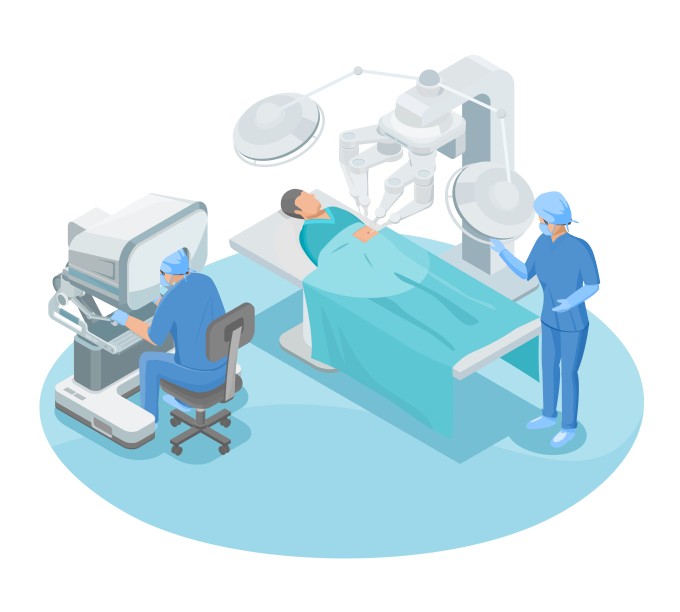
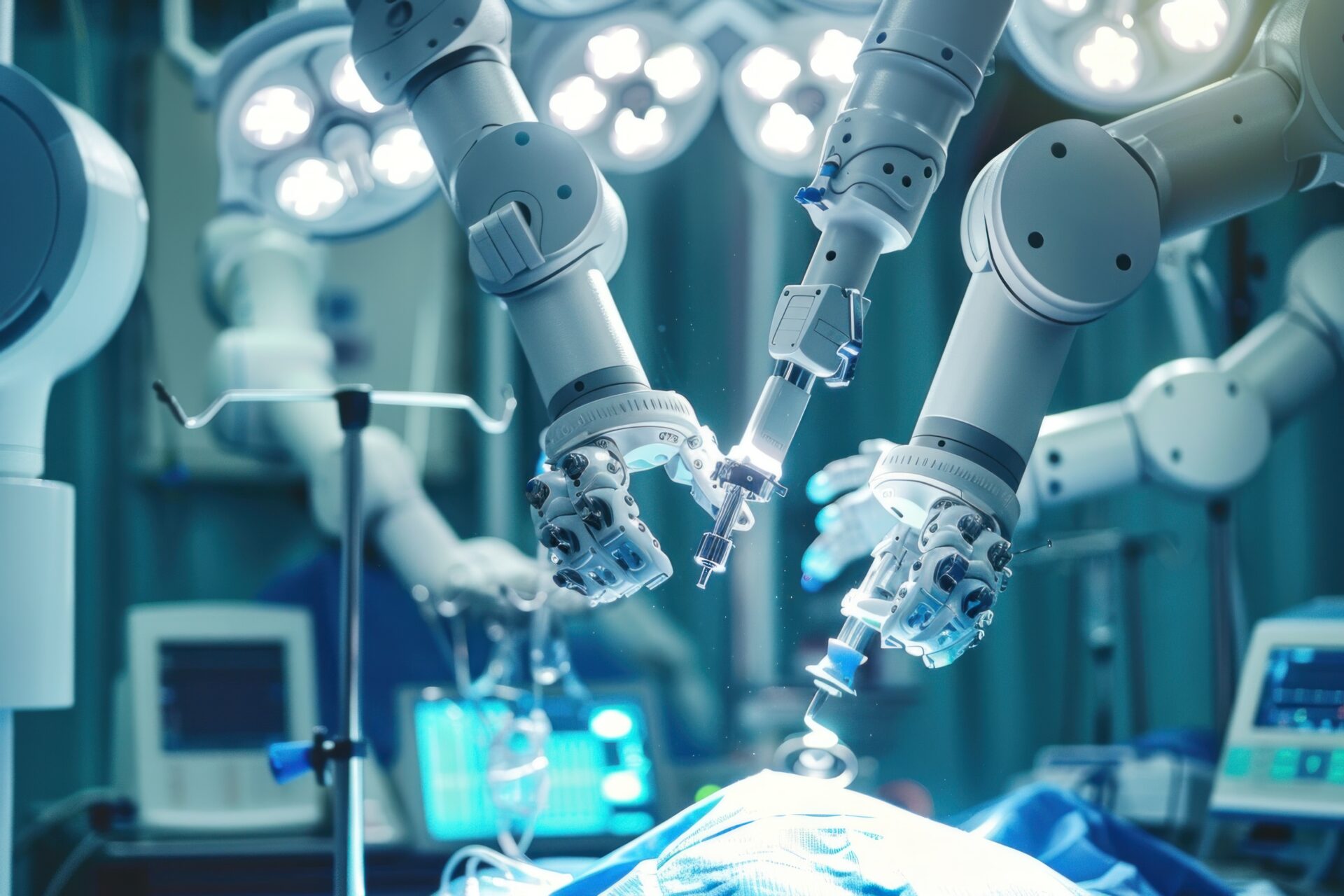
Robotic surgery, also called robot-assisted surgery, allows physicians to perform many types of complex surgeries with greater precision, flexibility, and control than would be possible with conventional techniques. Robotic surgery is usually associated with minimally invasive surgery (surgery performed through small incisions). It may also be used for traditional open surgery. The most widely used clinical robotic surgical systems include a camera arm and a mechanical arm with surgical instruments attached. During surgery, the physician makes a small incision in the body and inserts miniaturized instruments and a high-definition 3D camera. The surgeon manipulates the arm while sitting at a computer console near the operating table. The surgeon then manipulates these instruments from a nearby console to perform the surgery. The computer translates the surgeon's movements into instruments that move exactly as the surgeon moves. The surgeon leads other team members who assist during the operation. The surgeon is in constant control of the robot, and the surgical system responds to the surgeon's commands.
The console provides the surgeon with a high-definition, magnified, 3D view of the surgical site. Surgeons who use the robotic system find that for many procedures it enhances precision, flexibility and control during the operation and allows them to better see the site, compared with traditional techniques.

Using robotic surgery, surgeons can perform delicate and complex procedures that may be difficult or impossible with other methods. Often, robotic surgery makes minimally invasive surgery possible.
The benefits of minimally invasive surgery include:
- Fewer complications, such as surgical site infection
- Less pain and blood loss
- Shorter hospital stays and quicker recovery.
- Smaller, less noticeable scars
Technology and Market Changes: The Impact of Patent Expiration
Surgical robots were developed and commercialized in the United States in the late 1990s and have been used in a variety of surgical procedures. For many years, the market was dominated by one company, but more and more companies are entering the market, as the patents of the market leaders have expired in recent years. The market leader is believed to hold hundreds of patents on basic movements and the design of the arm's joints, and automatically adjusting the position of the endoscope expired a few years ago.
Of these patents, those related to the basic concept of allowing doctors to control the robot arm from a control stand and automatically adjusting the position of the endoscope expired a few years ago. This presents an opportunity for competitors that have been unable to develop practical robots because of patent barriers. About 30 companies around the world are now following in their footsteps. Patents on arm joint mechanisms and other peripheral patents will expire sequentially by 2019, and startups and other companies are entering the market. This has increased the likelihood that the price of surgical support robots, which used to cost in the millions of dollars to install, will drop dramatically.
Market Diversification through Weight Reduction and Functional Specialization
The newcomers will reduce the burden on the medical field by reducing the weight and simplifying the functions to keep the price to a few hundred thousand dollars, a fraction of the cost of the preceding manufacturers. Various companies are beginning to compete, including those that use electric motors to move the arm and those that use pneumatic pressure to move the arm. Some companies are trying to provide the ability to analyze air pressure and transmit the subtle tactile sensation of gripping tissue to the operating physician's hand. This is an attempt to support accurate surgery by transmitting not only the image of the endoscope but also the sense of touch. The use of pneumatic pressure will lead to weight savings and a reduction in the number of parts.
Enhanced Support through the Use of Specialized Assistive Robots and AI
The surgical robot market is expanding every year, because more and more hospitals are introducing these robots because they can support accurate surgery, lower the burden on the patient, and shorten the time spent in the hospital. Other types of robots currently under development are those that specialize in assisting in surgery. The doctor performs the surgery itself, while the robot assists the assistant in operating the endoscope's camera and lifting up surrounding tissues. Surgeries that used to require three doctors can now be performed by one or two if a robot is used. Companies that use pneumatic arms and companies that develop robots specialized for assisting patients are aiming to increase their market share by reducing the cost of installation.
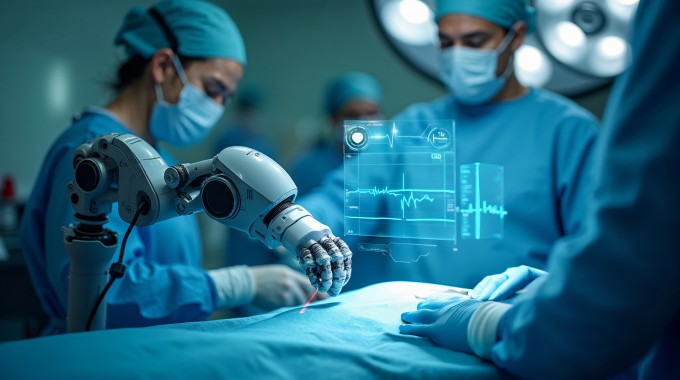
Systems that use artificial intelligence (AI) to support doctors operating robots and endoscopes are also being developed. This system is said to support doctors' judgment by analyzing image from endoscope cameras and indicating the boundaries of organs on the monitor screen.
Top manufacturers are also beginning to develop mobile applications for surgeons.
The app displays console time (operating time of the surgical robot system) for each procedure performed, the forceps used, and the operating time, etc., and compares this to the national average for similar surgeries, enabling the primary surgeon to check his/her own surgical trends and learning curve, and to use this information to improve techniques and treatment results.

Surgeon Support via Mobile Apps and Cloud Linkage
When a surgeon installs the app on a mobile device such as a smartphone, logs into the system via the cloud, and performs a surgery, log data is collected and can be checked on the spot.
The app also functions as a gateway to an online surgical training system, and by using a dedicated simulator, the surgeon can check the exercises he or she has performed and his or her scores.
Market Drivers and Challenges Faced by New Entrants
The long-time frontrunners have the advantage of having steadily built up their case studies amid the trend toward minimally invasive surgery and have increased their insurance coverage.
The latecomers need to prove the safety of their robot-assisted surgeries, obtain regulatory approval, and expand the range of medical departments covered by insurance.
What role Dexerials can contribute to
As mentioned in this article, there is a technological trend for surgical robots to become smaller and simpler in order to reduce the cost of installation.
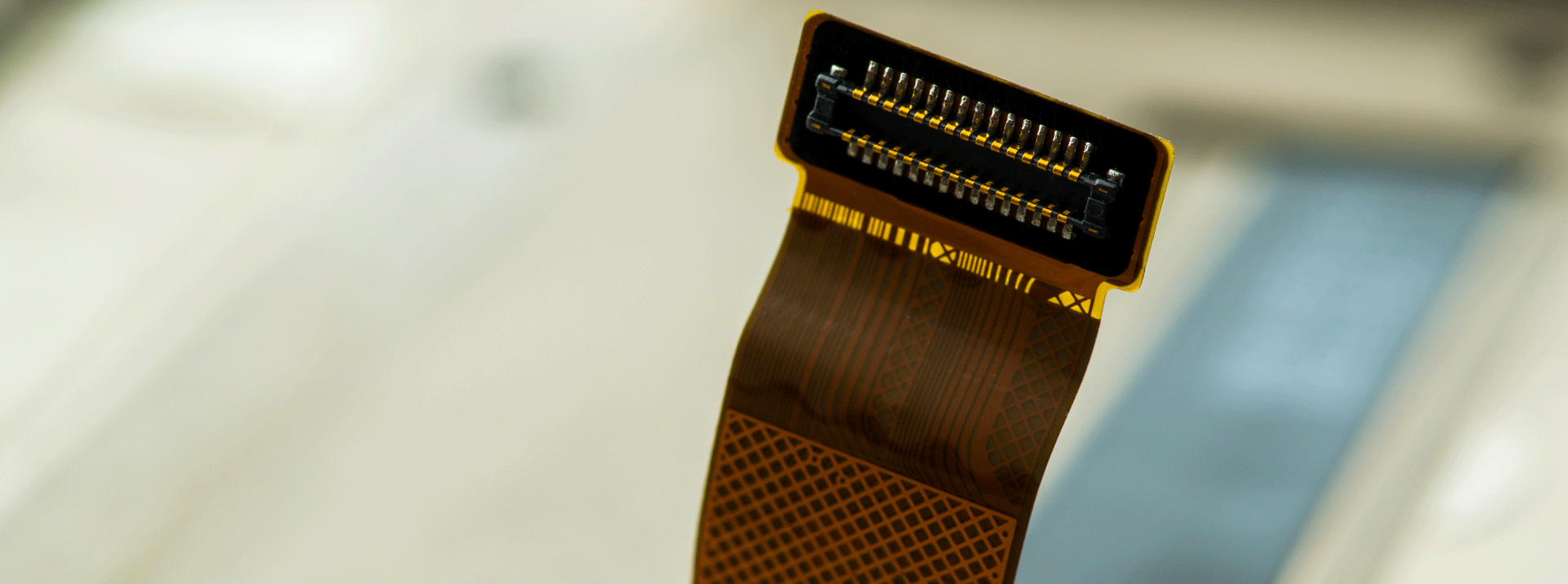
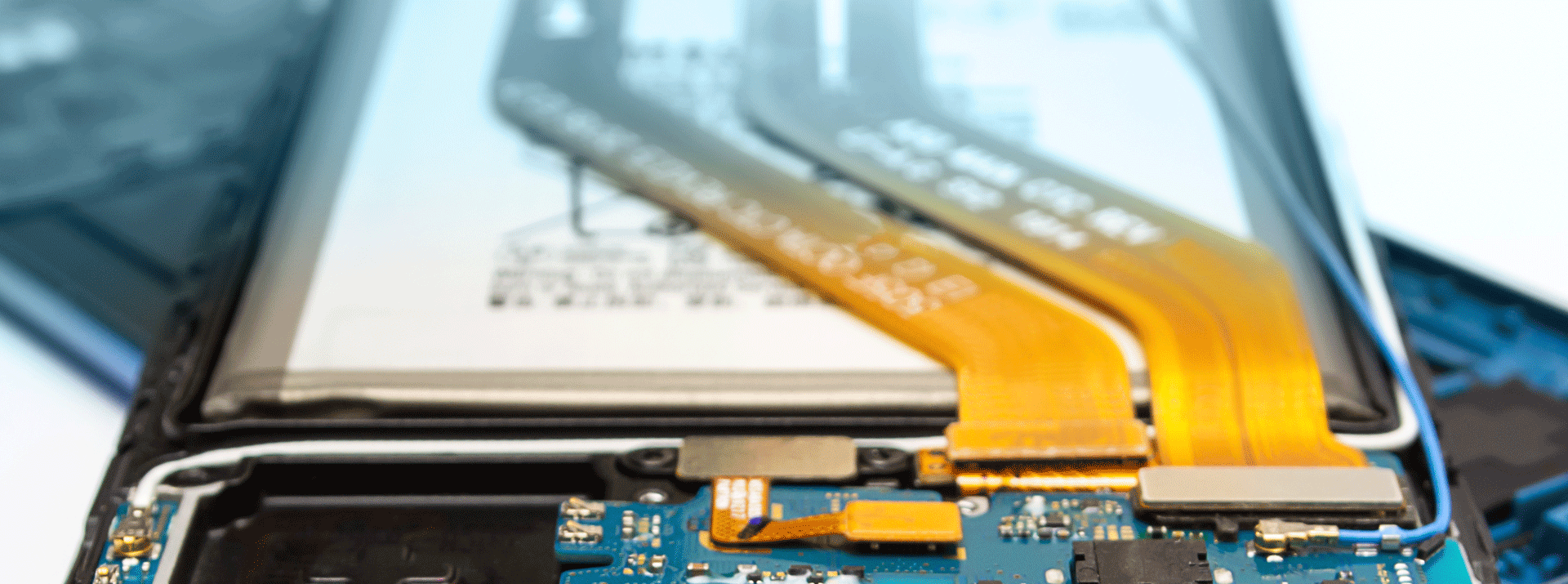
For example, Dexerials' anisotropic conductive film, ACF, can replace mechanical connectors and solder at various connection points of parts such as surgical robot arms and endoscope, thereby contributing to miniaturization of connection points. With ACF, the height of the connection can be reduced to almost zero, while mechanical connectors require a certain connection height. It is also possible to realize even finer pitch connections of 200um pitch or less by replacing solder connections with ACF.
Also, by replacing solder connections with ACF, Pb-free connections can be easily achieved. In addition, in order to realize remote surgery utilizing surgical robots and high-speed communication in the future, FPCs will be required to have high-speed transmission, which may require low-dielectric bonding sheets developed by Dexerials. For more information on low-dielectric bonding sheets, please read this article.
Related articles
Dexerials is a materials manufacturer that produces materials essential for the evolution of devices and next-generation solutions.
We will create new value with partners around the world in areas including electronic components, bonding materials, and optical materials.
- Share
We provide materials on our products and manufacturing technologies.
They can be downloaded for free.
Download Materials
We provide materials on our products and manufacturing technologies.
They can be downloaded for free.
Download Materials