
- Optical Semiconductor Products
Dexerials Photodetectors: The Technology Behind the Light Barriers that Form the Foundation of Manufacturing Safety

Contents hide
- 1. Invisible fences between people and machinery: the present and future of safety light curtains
- 2. What are safety light curtains?
- 3. Increasingly diverse applications at various factory access points
- 4. Market size and growth: the safety device market expands along with robotics adoption
- 5. Evolving structure and functionality: simple yet advanced safety design
- 6. Trends to watch: adoption by small and medium-sized businesses and IoT
- 7. Dexerials’ “light receiving elements” used in safety light curtains
- 8. Technology at the foundation of manufacturing safety
Invisible fences between people and machinery: the present and future of safety light curtains
Safety measures in manufacturing environments are becoming more sophisticated each year. With advances in automation, robotics, and smart factory technologies, ensuring safety in spaces shared by people and machines has become an essential challenge for all manufacturing settings.
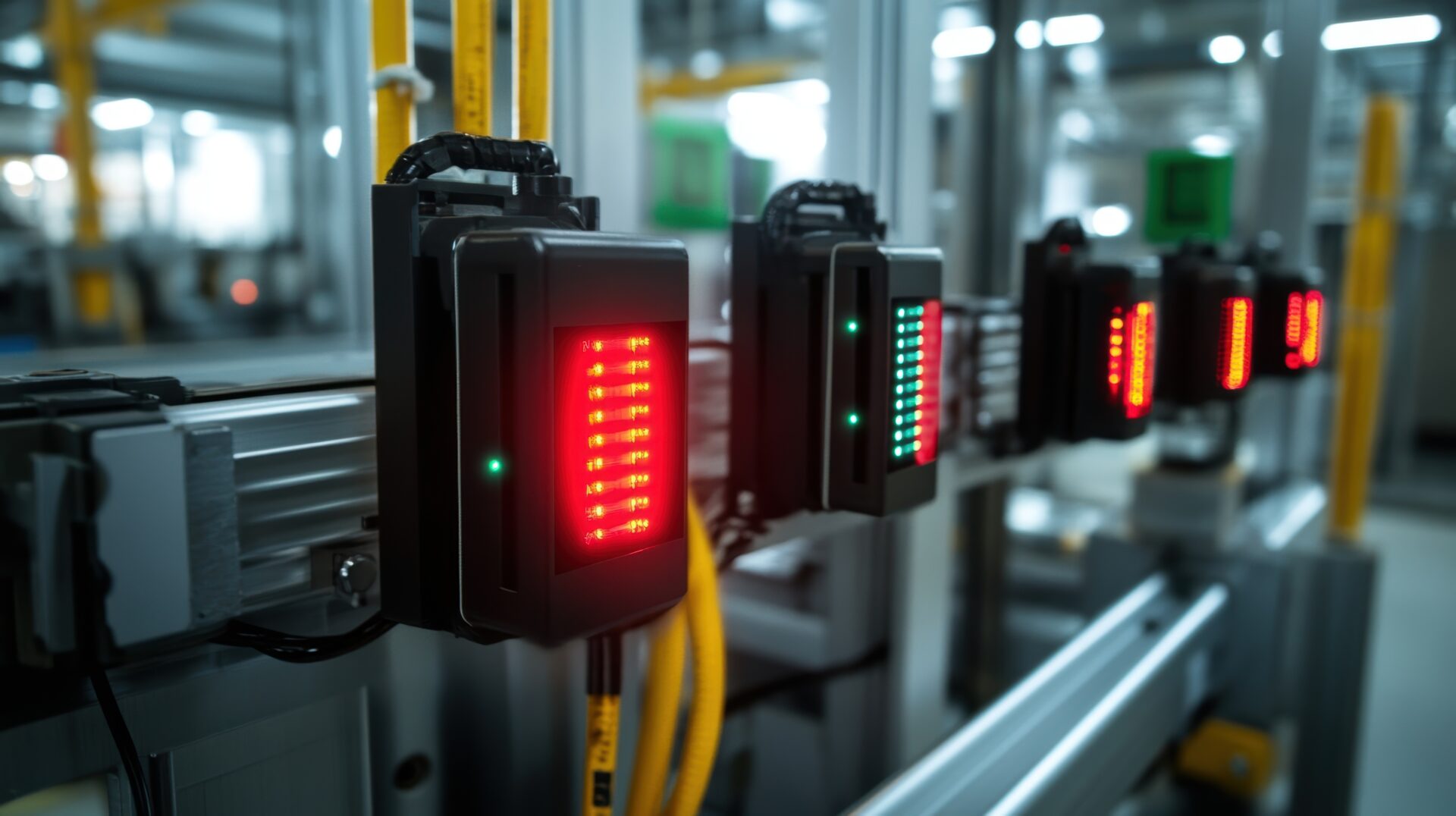
As such, safety devices known as safety light curtains have been receiving renewed attention in recent years. They act as invisible safety fences—if a person enters the operating range of a machine, the device instantly detects it and stops the machine to ensure the person’s safety.
In this article, we will explore the basics of safety light curtains, current market trends, and future technological developments.
What are safety light curtains?
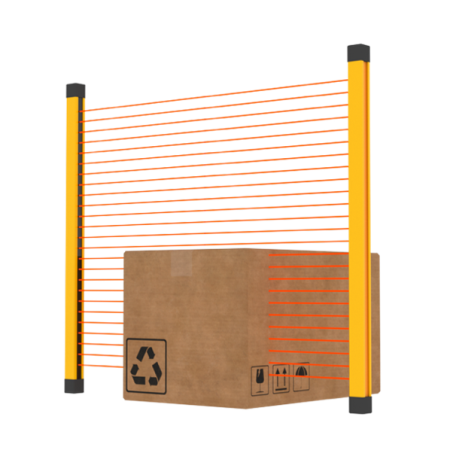
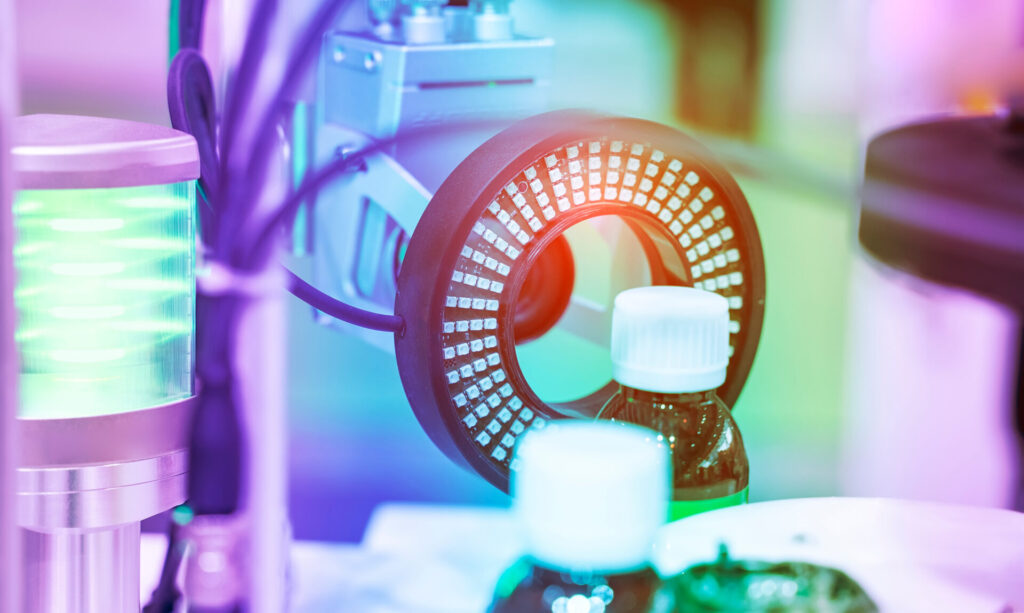
Safety light curtains are invisible barriers created using non-visible light such as infrared light. They are safety devices that detect the presence of people or objects and stop machines safely.
These systems consist of emitter units with internal light sources positioned across from receiver units. When a hand or a body enters the space between the units, the system instantly detects the interruption of light and sends an emergency stop signal to the machinery.
Unlike gates and safety fences that physically separate spaces, a key feature of safety light curtains is their ability to flexibly partition spaces without physical contact
Increasingly diverse applications at various factory access points
Safety light curtains are already widely used in a variety of settings including:
- In front of press machines – to prevent serious accidents by detecting workers’ hands and fingers
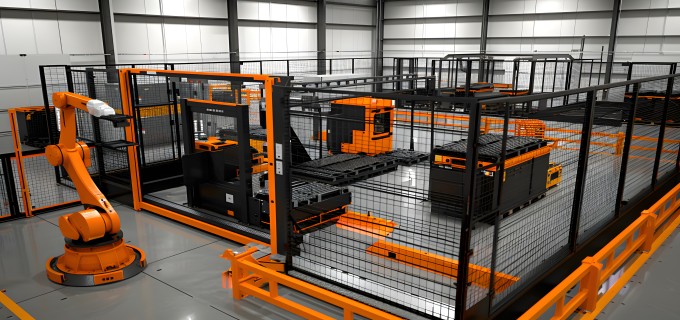
- Industrial robot work areas – to detect worker entry and stop robot operation
- Conveyor line gates – to allow only workpieces to pass while detecting human presence
- Assembly workspaces – to enable efficient use of space while maintaining safety
In particular, physical fences can hinder efficient material flow in factories that have implemented high-speed production lines and automated guided vehicles (AGVs). As a result, invisible barriers like safety light curtains are increasingly being adopted to enhance productivity.
Market size and growth: the safety device market expands along with robotics adoption
According to a market research report (Safety Light Curtain Market Size, Share & Growth [Latest]) , demand for safety light curtains is steadily increasing around the world. The market is expected to grow from an estimated $1.3 billion in 2025 to $1.7 billion in 2030 with a compound annual growth rate (CAGR) of 6.3%.
Several factors are driving this growth:
- The rise of smart factories is accelerating automation, creating more environments where people and machines work side by side
- The global adoption of industrial robots is increasing the need for advanced safety measures
- Manufacturing investments in China, India, and other Asian markets are boosting demand for safety devices
- Stricter safety standards from organizations such as the IEC and ISO are leading to national regulations and faster adoption of compliant technologies
In particular, the automotive, food and packaging industries are seeing growth in areas where people and robots work together, prompting the adoption of safety light curtains as a key safety solution.
Evolving structure and functionality: simple yet advanced safety design
A safety light curtain looks simple at first glance, but inside each device lies highly precise control technology.
- Multi-beam control – manages multiple infrared beams simultaneously
- False detection prevention via time-sequence control – emits and detects light in a set order with offset timing to avoid false triggers
- Ambient light compensation – corrects for interference from external light sources such as sunlight or factory lighting
- Lens contamination detection – identifies dirt or smudges on the receiver lens to prevent reduced detection accuracy
- Blanking functionality – allows continued operation even when certain beams are blocked by jigs or conveyors
- Muting functionality – enables complex decision-making to allow processed workpieces to pass while stopping operation if a person or foreign object enters the area
Additionally, some manufacturers offer models equipped with digital indicators that display parameters such as beam alignment and receiver status. These features support easier installation adjustments and more efficient troubleshooting.
Trends to watch: adoption by small and medium-sized businesses and IoT
The following three trends in safety light curtains are expected to gain traction in the future:
- Growing adoption by small and medium-sized businesses
While light safety curtain adoption has primarily centered on large manufacturers, the introduction of more affordable and compact models is driving its spread to small and medium-sized companies as well. - Digitization and Smart Integration
Some products feature digital indicators or communication capabilities. There is an emerging shift toward smart safety through connection with smart factory technologies such as IoT, PLC, and SCADA. - Strengthened environmental adaptability
Advancements in environmental durability and self-diagnostics will enable reliable operation in environments with steam, machining chips, or oil.
Dexerials’ “light receiving elements” used in safety light curtains
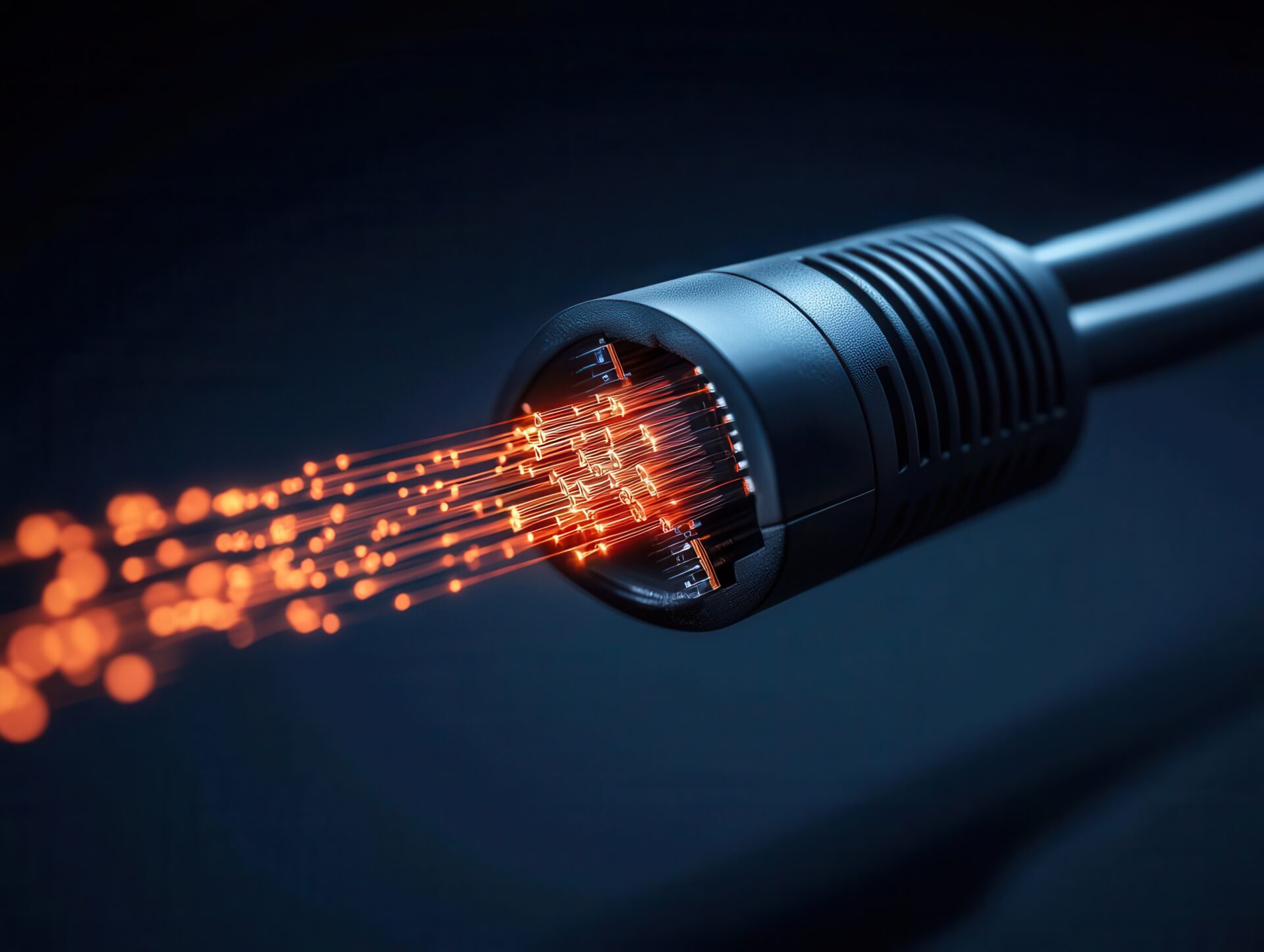
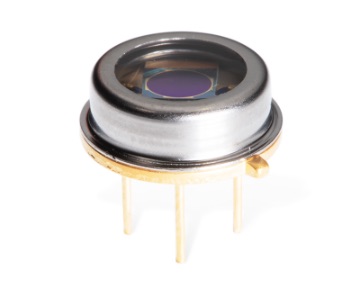
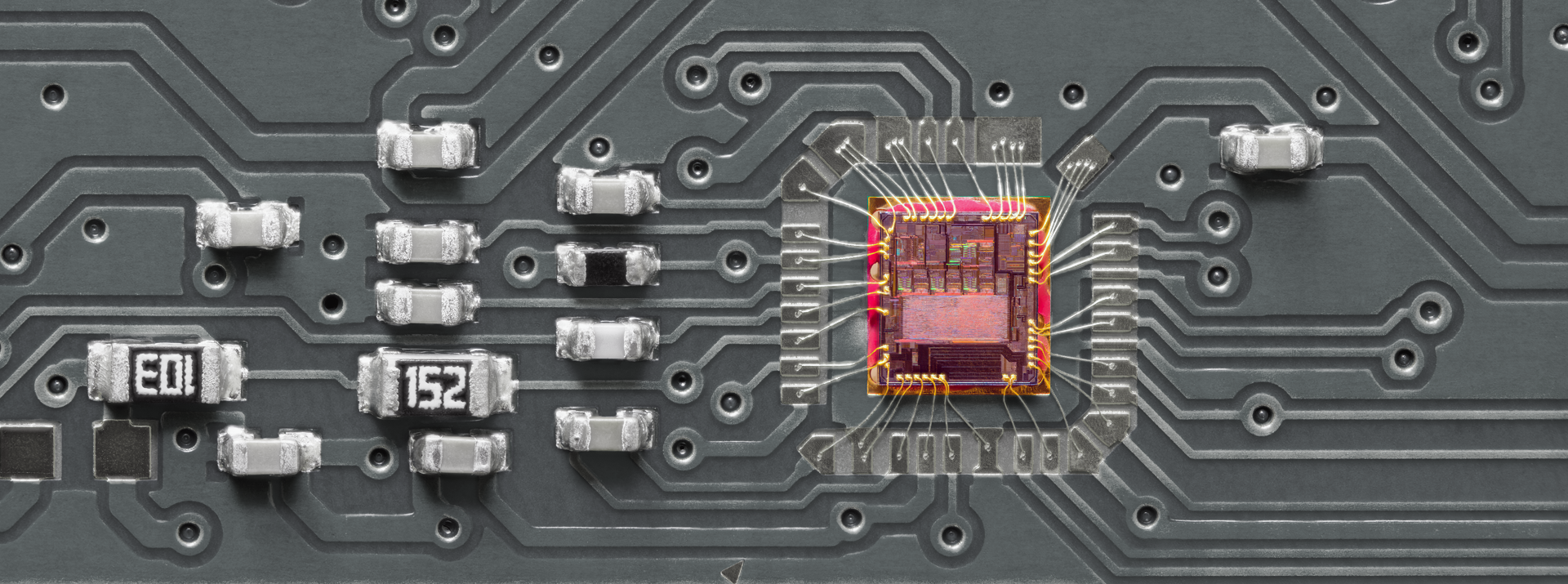
Photodiodes—known as light-receiving elements—are at the heart of safety light curtains, devices that help create safer and more productive factories. These photodetectors are therefore a key component to achieving both factory safety and productivity. By precisely detecting changes in infrared light from the emitter side, they visualize the status of the invisible light barrier and provide data to the controller.
Dexerials develops and supplies multiple high-sensitivity, fast-response photodetectors optimized for use in safety light curtains. These products feature characteristics such as:
- Wavelength sensitivity optimization – high photosensitivity tuned for near-infrared wavelengths around 900 nm, commonly used in safety light curtains
- Low noise and high signal-to-noise ratio – minimizes false detections and ensures stable operation under ambient light and environmental noise
- Fast response – high-speed signal response to immediately stop machinery when light is interrupted; supports advanced functions such as muting and blanking
- Compact and modular-compatible – compact package design enables slimmer devices and supports multi-axis configurationsIn addition, Dexerials’ photodiodes are chosen for uses requiring high reliability due to their low variation between production lots and stable quality.
Safety light curtains must meet different performance and reliability requirements depending on the application environment and required safety level.
They are classified into categories such as Type 2 and Type 4 based on the international safety standard IEC 61496.
Type 4 devices are designed for environments requiring the highest level of safety performance and demand advanced photosensor technology in both design and manufacturing.
For example, Type 4 safety light curtains are recommended for high-risk equipment such as presses and industrial robots. Type 2 units, on the other hand, are intended for relatively low-risk areas with limited human access.
Because of these differing requirements, Type 4 safety light curtains require photodetectors with both high sensitivity and fast response. Dexerials’ photodiodes meet these demanding specifications and have been widely adopted in Type 4 models.
In safety devices, malfunctions are unacceptable. In this context, the quality and stability of the light-receiving elements directly impact workplace safety. Dexerials’ photodiodes incorporate cutting-edge optical semiconductor technology to meet these critical demands.
Technology at the foundation of manufacturing safety
As factory smartification continues, safety light curtains are becoming even more important as a technology that allows people and machines to work together safely. And at the heart of that technology lie the light receiving elements that accurately detect invisible light.
Dexerials’ photodiodes provide both accurate detection and high reliability as the last line of defense in safety controls and have been adopted in many products on the global market. We believe that further evolution of photodetectors will directly impact product competitiveness as further advances are made in high-performance, compact, and low power consumption safety light curtains.
We will continue our efforts to further the evolution of photodiodes—a technology at the cornerstone of manufacturing safety.
Related articles


私たちデクセリアルズはデバイスの進化に欠かせない材料や次世代のソリューションを生み出す、マテリアルメーカーです。
電子部品、接合材料、光学材料をはじめと世界中のパートナーと新しい価値を生み出していきます。
- Share
We provide materials on our products and manufacturing technologies.
They can be downloaded for free.
Download Materials関連製品
Related articles
Photonics Popular Articles






We provide materials on our products and manufacturing technologies.
They can be downloaded for free.
Download Materials